Leave Your Message
Engineered with multi-channel camera interfaces, hardware trigger synchronization, and wide-temperature reliability for demanding manufacturing lines.
Meeting the high-throughput, sub-millisecond inspection challenges of Industry 4.0 and smart automated manufacturing.
Industrial manufacturing has entered a transformative era where automated optical inspection (AOI) is no longer a luxury, but the fundamental backbone of quality assurance and zero-defect initiatives. In high-speed assembly environments—ranging from electric vehicle (EV) battery pouch cell stacking and micro-semiconductor wafer dicing to pharmaceutical bottle capping—conventional rule-based image processing algorithms are reaching their physical and computational limits. Modern production lines demand instant micro-crack identification, micron-level metrology, optical character recognition (OCR), and complex color consistency verification executed in mere milliseconds. At the operational heart of these vision apparatus sits the dedicated embedded PC board for machine vision inspection systems.
Unlike commercial desktop motherboards or generalized server blades, an embedded PC board purpose-built for industrial vision must bridge the deterministic physical world of camera sensors and photonics with high-speed neural network inference. The integration of high-resolution CMOS global-shutter sensors operating at hundreds of frames per second generates immense raw image data streams. Transferring, filtering, buffering, and processing this imagery without frame dropping requires an advanced board-level architecture that synchronizes PCIe bandwidth, Gigabit Ethernet / USB3 Vision protocols, hardware-isolated digital I/O, and specialized heterogeneous processing engines.
Machine vision requires microsecond-level synchronization between line-scan cameras, strobe illumination, and pneumatic reject valves. Embedded boards feature optically isolated GPIOs and FPGA-driven timers to ensure flawless spatial-temporal alignment.
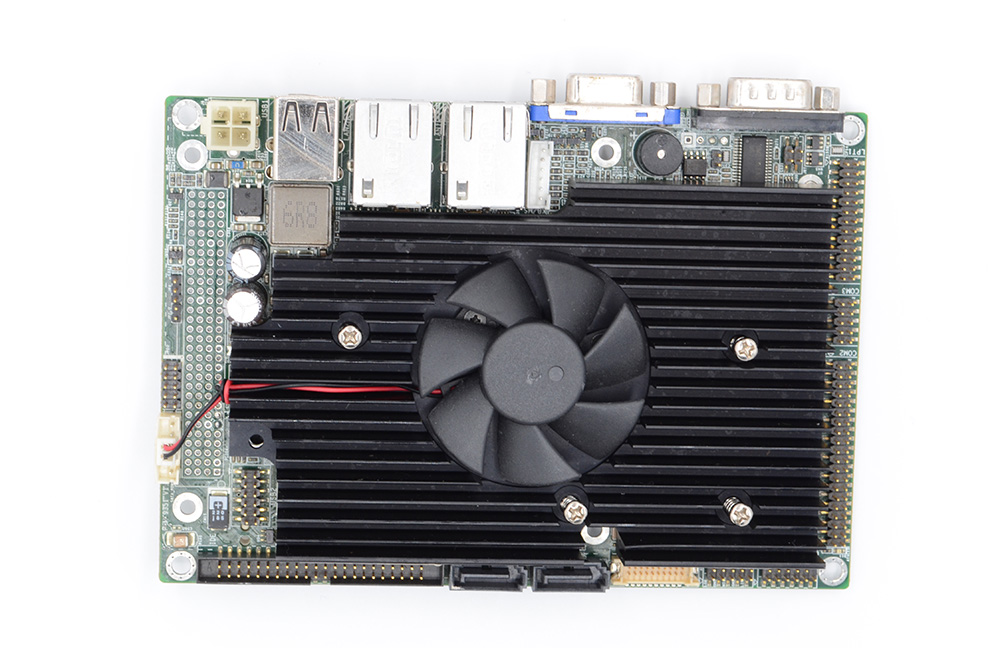
Certified for continuous operation across -40°C to +85°C temperature extremes. Fanless passive heat sinks eliminate moving parts, preventing dust contamination in cleanrooms and vibration failures near stamping machinery.
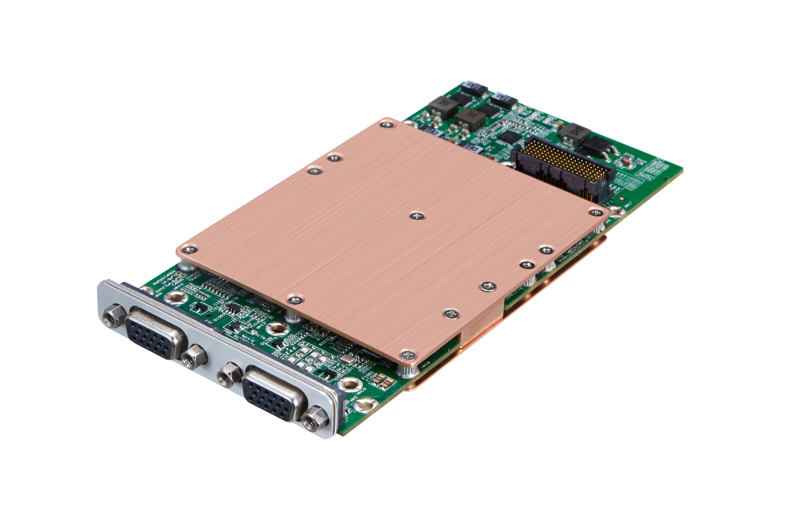
Combining high-efficiency x86 multi-core architectures (Intel Core / Elkhart Lake) with dedicated GPU or VPU expansion modules via PCIe 3.0/4.0, executing YOLOv8 and semantic defect segmentation models directly at the machine edge.
Detailed breakdown of board-level engineering requirements necessary for uncompromised image capture and analysis.
Standard motherboards frequently route multiple USB or Ethernet ports through a shared internal hub, causing catastrophic bandwidth bottlenecks when multiple high-speed vision cameras stream uncompressed video concurrently. An industrial embedded PC board tailored for machine vision provides dedicated PCIe lanes to each controller (such as Intel i210/i225 Ethernet controllers), delivering true non-blocking GigE Vision transmission, Power over Ethernet (PoE) capability, and separate root USB 3.2 Gen 2 host controllers for lockable camera cables.
Vision systems depend heavily on coordinated LED lighting pulses (flash duration of <10 μs) to freeze the motion of parts traveling down high-speed conveyor belts. Embedded PC boards incorporate isolated Digital Input/Output (DIO) with transient voltage suppression and high sink current capability. This allows machine builders to connect proximity sensors, rotary encoders, and strobe controllers directly to the motherboard without requiring secondary external PLCs, lowering overall machine bill-of-materials (BOM) and reducing latency jitter to the sub-microsecond threshold.
When running concurrent AI classification, segmentation, and rule-based edge detection, memory bandwidth is a vital operational parameter. Support for DDR4/DDR5 SO-DIMM configurations up to 32GB or 64GB with high transfer rates (up to 3200MT/s) guarantees smooth handling of 20MP+ monochrome or RGB frame buffers. Furthermore, onboard M.2 NVMe PCIe x4 slots accommodate solid-state storage with sustained read/write speeds exceeding 2,500 MB/s, facilitating instantaneous logging of defective part images for traceability and regulatory compliance in medical device and aerospace manufacturing.
Factory environments are plagued by electromagnetic interference (EMI) from heavy servo motors, voltage sags, and severe mechanical vibrations. YDSTECH industrial embedded boards are fortified with wide voltage input tolerance (9V~36V DC), MIL-STD-810G shock and vibration compliance, and conformal coating options that shield sensitive SMD components from moisture, salt spray, and airborne chemical particulates typical in metallurgy, food processing, and chemical production.
How embedded computer boards power mission-critical automated optical inspection across major global industries.
In electric vehicle battery production, tiny separator film pinholes, electrode tab misalignment, or microscopic weld spatter can trigger catastrophic thermal runaway events. Embedded PC boards mounted on high-speed winding and stacking machines interface with multiple line-scan cameras over 10-Gigabit or dual Gigabit links. Running deep learning segmentation models accelerated by onboard GPU display cards, the vision system detects micron-scale electrode burrs at speeds of 60 meters per minute, instantly firing trigger signals to tag or divert non-compliant battery cells.
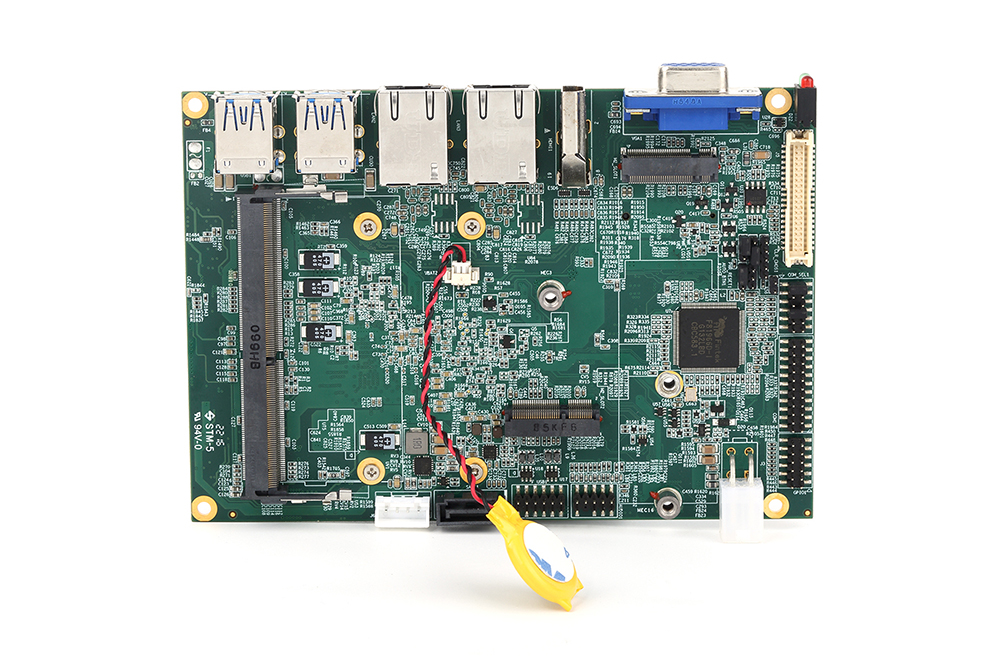
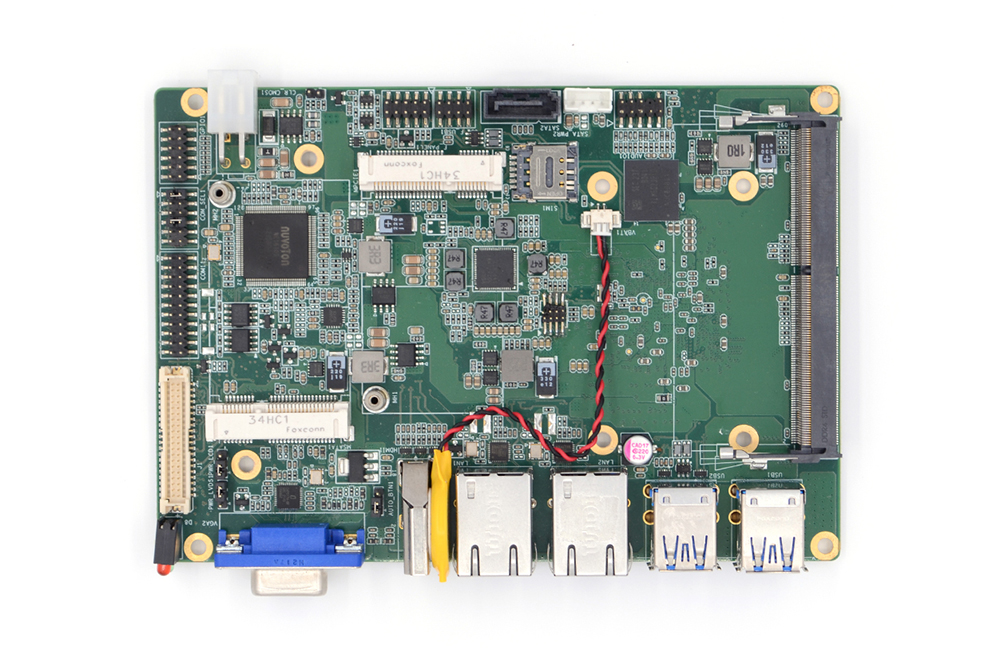
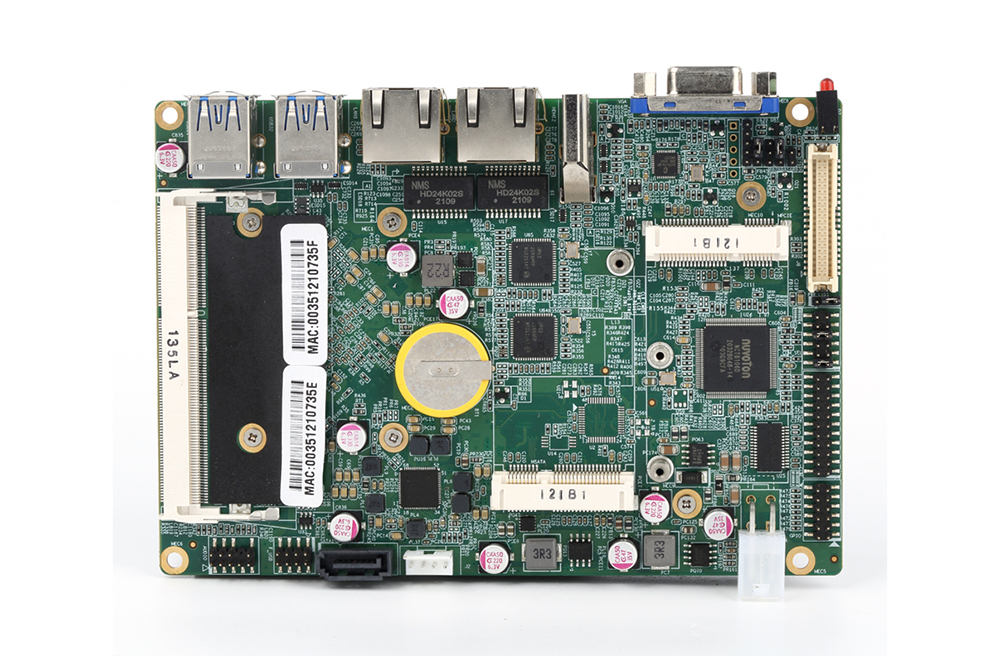
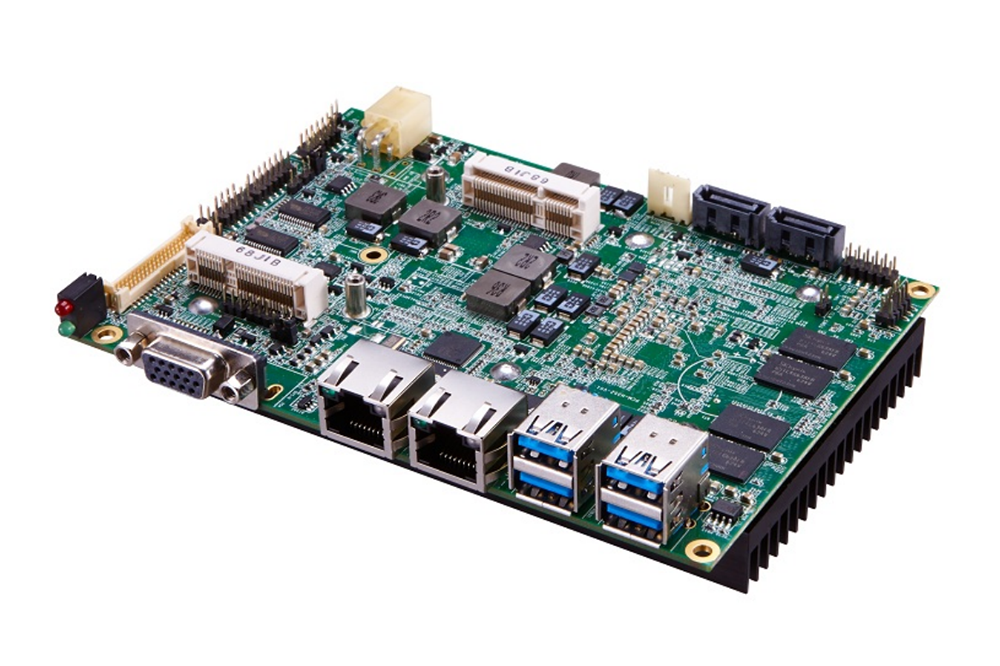
Surface Mount Technology (SMT) demands 100% inspection of solder paste printing (SPI) and automated optical component placement (AOI). Boards like the 3.5" x86 single-board computers provide the dense compute footprint required to process 3D height-mapping data, detecting solder bridging, tombstoning, and component skew on miniaturized 01005 passives and BGA chipsets before the PCB proceeds into the reflow oven.
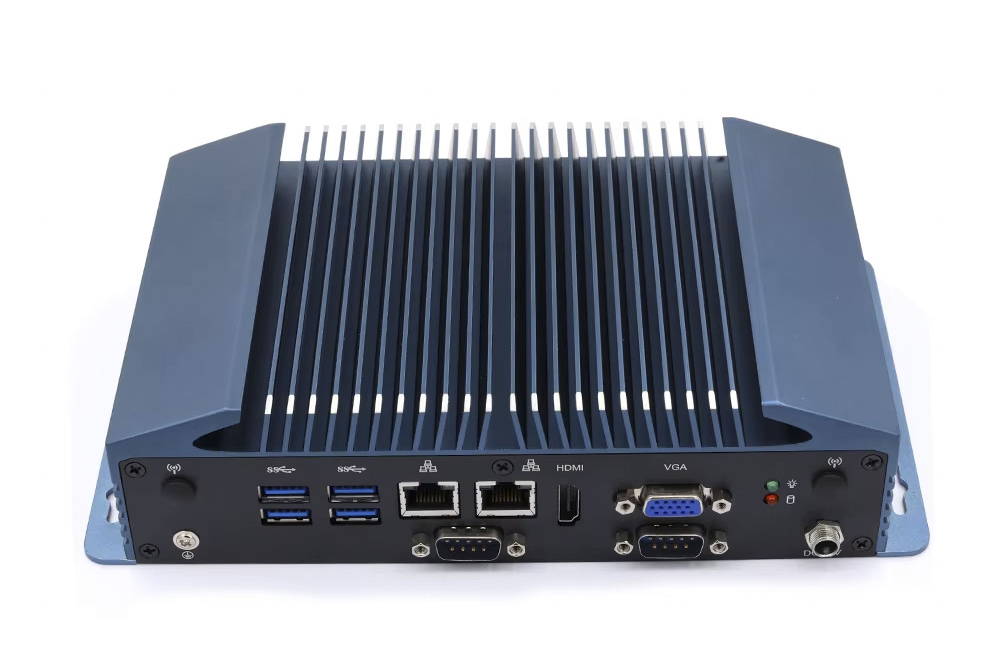
Regulatory mandates such as the FDA Drug Supply Chain Security Act (DSCSA) require high-speed optical character recognition (OCR) and 2D DataMatrix code verification on blister packs, ampoules, and cartons. Operating at rates up to 1,200 packages per minute, embedded fanless vision computers process barcode legibility, expiration date validity, and vial fill levels with zero downtime, maintaining an unalterable audit trail while preventing packaging errors.
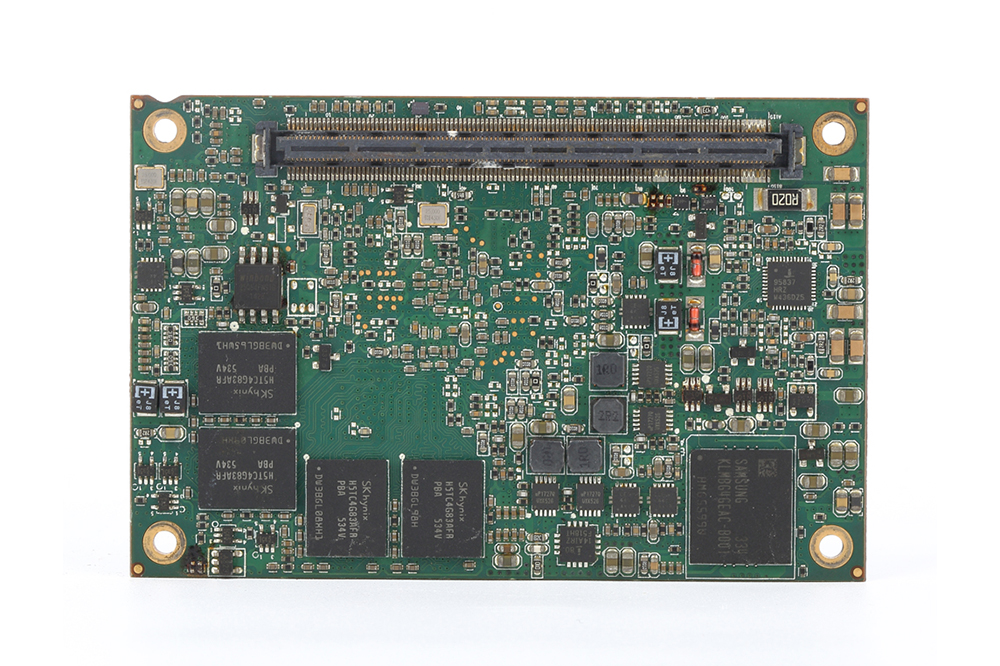
In logistics warehouses and automated fab shops, collaborative robots (Cobots) and AMRs rely on 3D stereoscopic vision and LiDAR processing for real-time spatial SLAM and bin-picking. Compact COM Express modules and 3.5-inch wide-temp SBCs deliver the high compute-per-watt efficiency essential for battery-powered automated guided vehicles navigating complex dynamic factory floors.
Pioneering independent R&D and manufacturing of high-performance industrial computing platforms since 1999.
Shenzhen YDSTECH Electronics Co., Ltd. is a high-tech enterprise specializing in industrial computers. Since the establishment of YDSTECH in 1999, we have been committed to independent research and development, innovation, production and sales of industrial computers, and we own the independent intellectual property rights of our core products.
We consider honesty and pragmatism as our motto and make it our long-term goal to provide customers with cost-effective products. In order to achieve this goal, we work constantly to develop new products, improve our service capabilities and promote the innovation of embedded computer applications to create long-term value and potential growth for our customers.
Our core technical team has over 15 years of experience in this industry, and has been focusing on embedded computer research and development, with rich and solid professional expertise. We believe that attitude means everything, since the establishment of YDSTECH, we have always been committed to work with a conscientious, responsible, attentive, professional, prudent and meticulous attitude, which ensures the high-quality output of the products, years of persistence and experience created our strong R&D team.
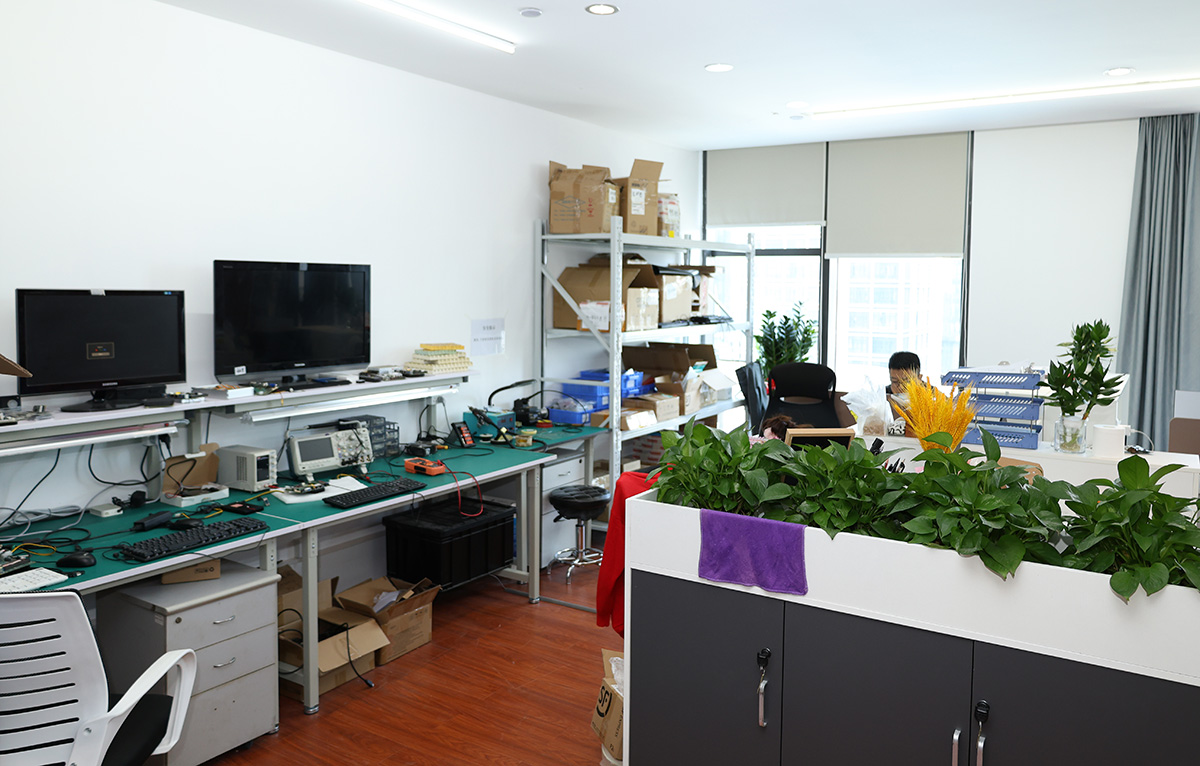
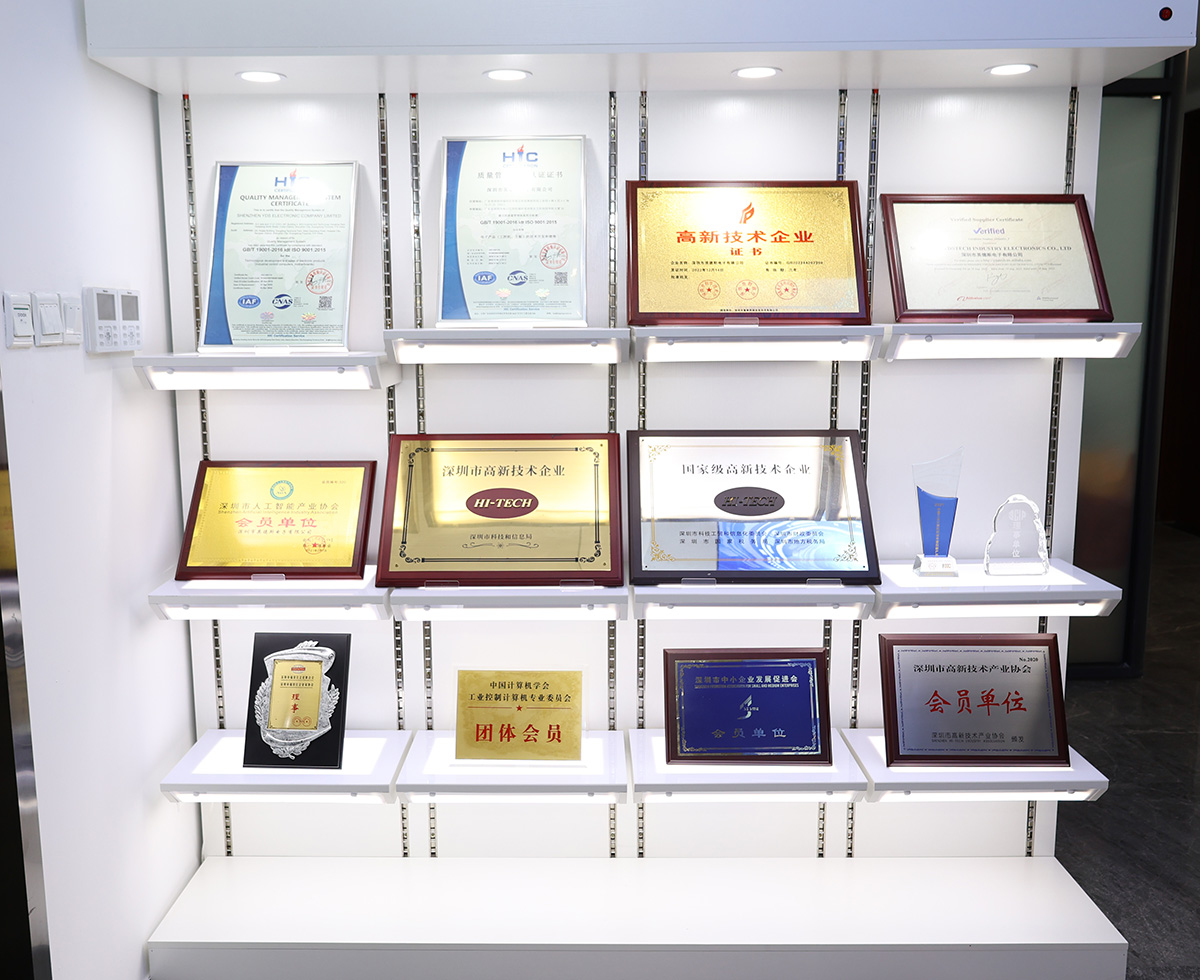
YDSTECH has set up a comprehensive quality assurance management system, adopting MSA quality system analysis, implementing rolling quality system audit, TQM, SPC process control and other quality management systems, establishing AVL supplier management system to ensure the quality of raw materials, and introducing rolling product reliability tests to ensure overall product reliability.
From ultra-compact COM Express core modules to high-power GPU acceleration display boards, discover our full catalog of industrial computing solutions.