Leave Your Message
High-performance 3.5-inch and COM Express boards optimized for low-latency robotics and industrial edge automation.
From conventional programmable logic controllers to high-throughput x86 compute platforms powering autonomous mobility.
In the rapidly advancing arena of smart manufacturing and intralogistics, the demand for sophisticated Embedded PC Boards for Industrial Automation and AGV Robot Control is witnessing exponential growth. Historically, factory automation relied strictly on hardwired programmable logic controllers (PLCs) and isolated microcontrollers designed for repetitive, deterministic cycles. However, the emergence of Industry 4.0, dark factories, and flexible manufacturing facilities has transformed warehouse logistics and assembly floors into dynamic, interconnected cyber-physical systems. Automated Guided Vehicles (AGVs) and Autonomous Mobile Robots (AMRs) now operate side-by-side with human workers, requiring onboard computers to execute real-time simultaneous localization and mapping (SLAM), deep-learning machine vision, path optimization, and complex fleet communications simultaneously.
To address this computational leap, modern engineering teams are shifting away from proprietary microcontrollers toward rugged x86-based embedded single-board computers (SBCs) and Computer-on-Modules (COMs). An industrial x86 embedded motherboard provides the perfect synergy of deterministic real-time OS execution (via RTOS or RT-Linux patches) and general-purpose computational power under standard operating environments like Ubuntu, ROS 2, and Windows 10/11 IoT Enterprise. This convergence eliminates hardware redundancies, allowing robot designers to unify motion control logic, sensor aggregation, safety protocols, and cloud IoT telemetry onto a single, compact embedded computer board.
Modern AGVs consolidate vision processing, path planning, and CANopen/EtherCAT motor driving into a single multicore x86 embedded platform, drastically shrinking internal wiring harness complexity.
Industrial operations present severe electrical noise, electrostatic discharge, constant kinetic vibration, and extreme temperature variations from sub-zero refrigerated storage to sweltering plant lines.
Unlike consumer-grade computing hardware, embedded industrial motherboards feature strictly controlled Bills of Materials (BOM) with guaranteed 7 to 15-year longevity cycles to protect engineering investments.
Examining how rugged embedded boards manage sensor fusion, kinematics, safety, and wireless communication on the factory floor.
Contemporary AGVs rely on complex multi-sensor suites to achieve millimeter-level localization accuracy. An autonomous pallet mover typically incorporates dual 2D safety LiDARs, time-of-flight (ToF) cameras, inertial measurement units (IMUs), wheel encoders, and ultrasonic obstacle detectors. The onboard embedded PC board acts as the central brain, processing gigabytes of spatial point clouds every second. High-bandwidth PCIe interfaces, low-latency DDR4/LPDDR4 memory architectures, and multiple high-speed Intel GbE/2.5GbE LAN ports allow uninterrupted data streaming from sensors without dropped packets or compute bottlenecks.
While navigation requires high-level computing power, wheel traction, steering actuators, and lifting mechanisms require deterministic sub-millisecond precision. Industrial embedded PC boards fulfill this dual requirement through isolated RS-485 serial buses, dual CAN 2.0B / CAN-FD interfaces, and real-time Ethernet protocols (such as EtherCAT and PROFINET). The motherboard coordinates closed-loop PID control loops with servo drives, ensuring smooth acceleration, precise docking against conveyor transfer stations, and instant braking upon obstacle detection.
AGVs are mobile battery-powered platforms, generally running on 24V or 48V DC battery systems (LiFePO4 or Lead-Acid). The power bus experiences frequent voltage sags during heavy lift motor actuation and high-voltage inductive spikes during emergency braking. Embedded motherboards designed for AGVs feature wide-input DC power circuits (commonly 9V to 36V DC) accompanied by TVS diodes, over-voltage, over-current, and reverse-polarity protection. Furthermore, intelligent ignition power management features handle automated software shutdowns and wake-on-power cycles during automated docking charger contacts.
Engineering considerations that distinguish true industrial boards from commercial-grade computing products.
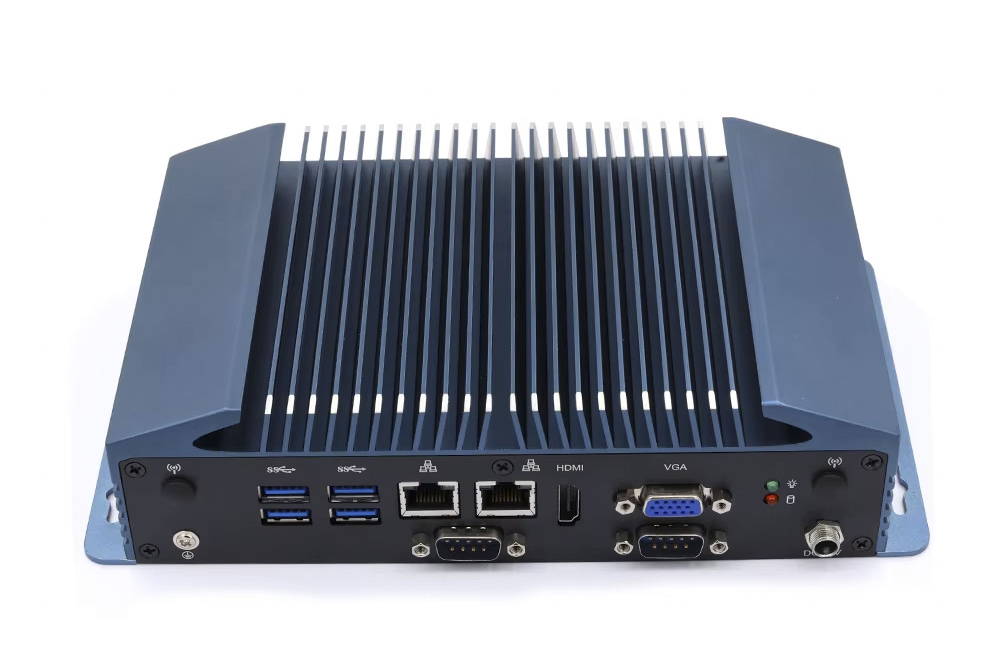
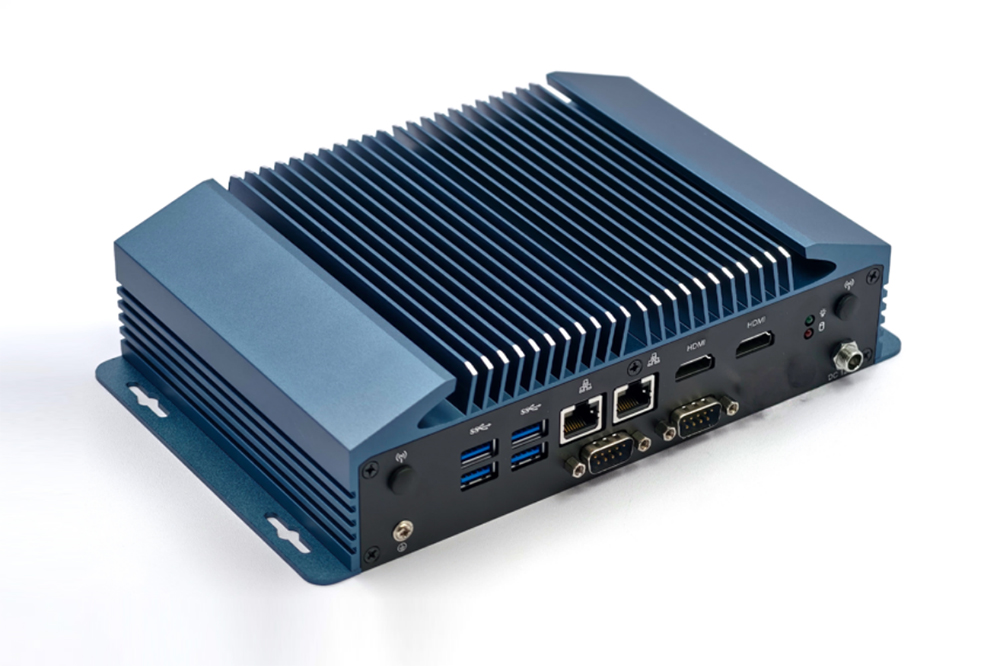
Cooling fans are a common point of mechanical failure in dusty industrial installations. Embedded automation boards utilize custom thermal spreaders and conduction heatsinks that transfer processor heat directly to the vehicle chassis or ribbed aluminum enclosures, ensuring MTBF ratings exceeding 50,000 continuous operating hours.
Industrial automated guided vehicles operate in unpredictable conditions, from refrigerated blast-freezer warehouses to outdoor container transshipment docks. Genuine wide-temperature embedded boards utilize industrial-grade capacitors, silicon, and oscillators rated for flawless zero-throttle execution across severe thermal spans.
Electromagnetic interference (EMI) generated by high-power induction motors and welding machinery can disrupt delicate digital communications. Rugged embedded boards incorporate 2.5kV optical and magnetic galvanic isolation across RS-232/422/485 serial ports, digital I/O lines, and Ethernet ports to protect core silicon.
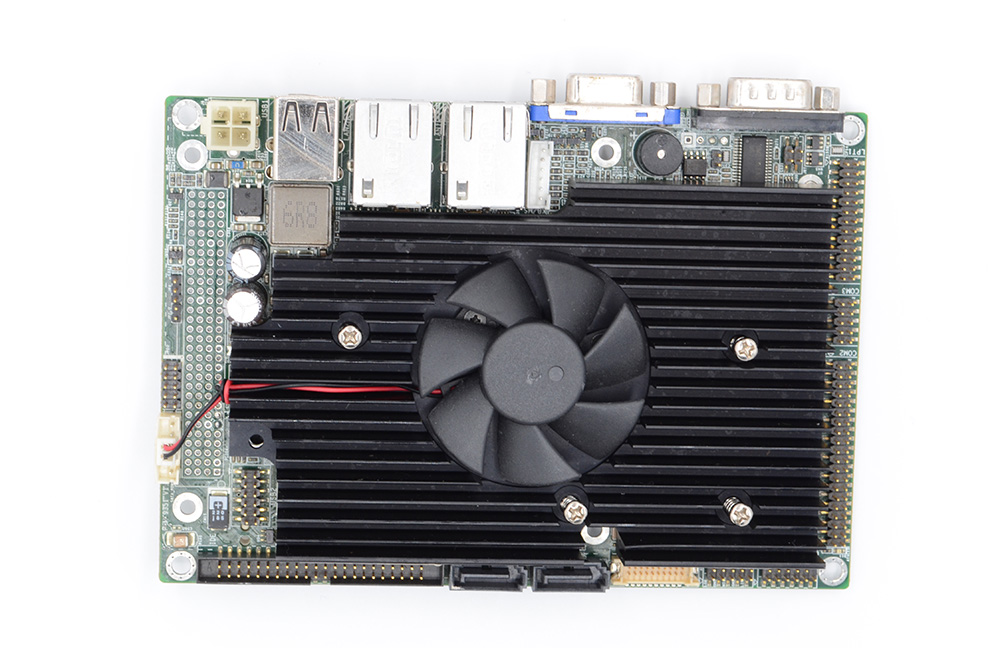
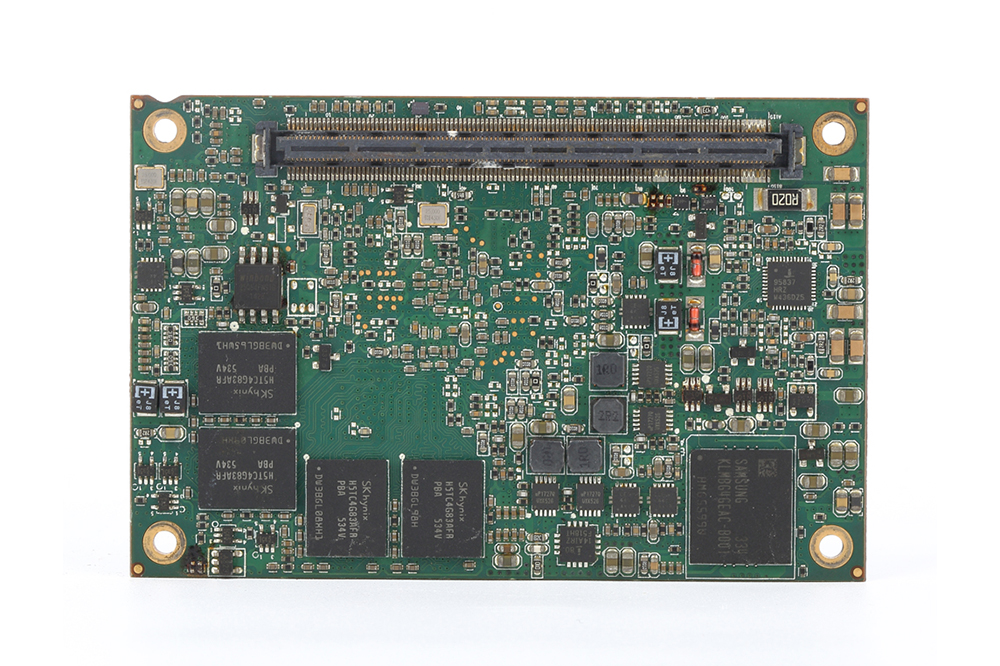
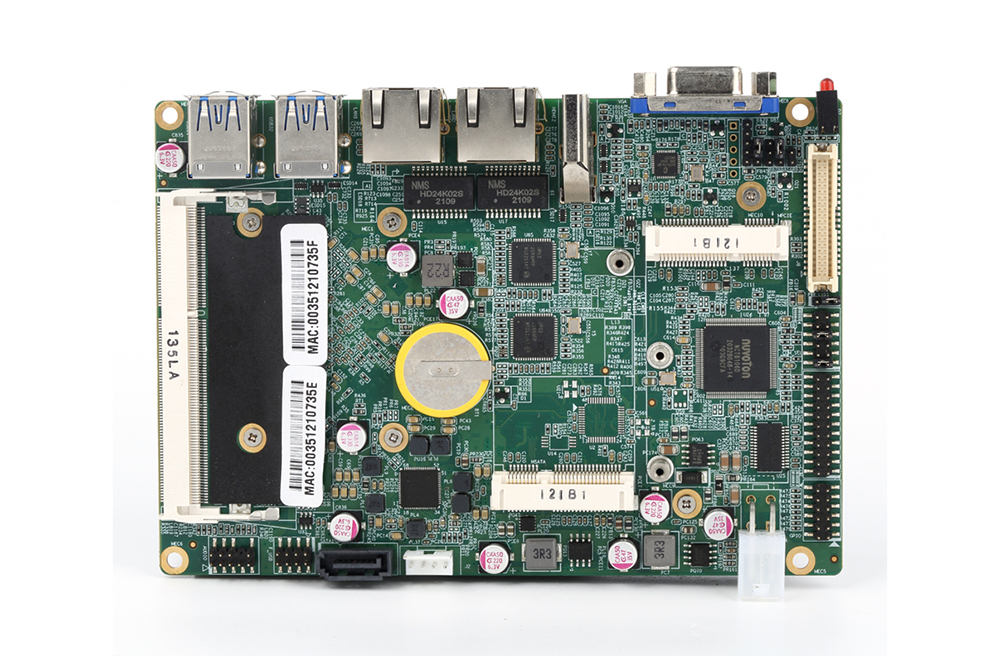
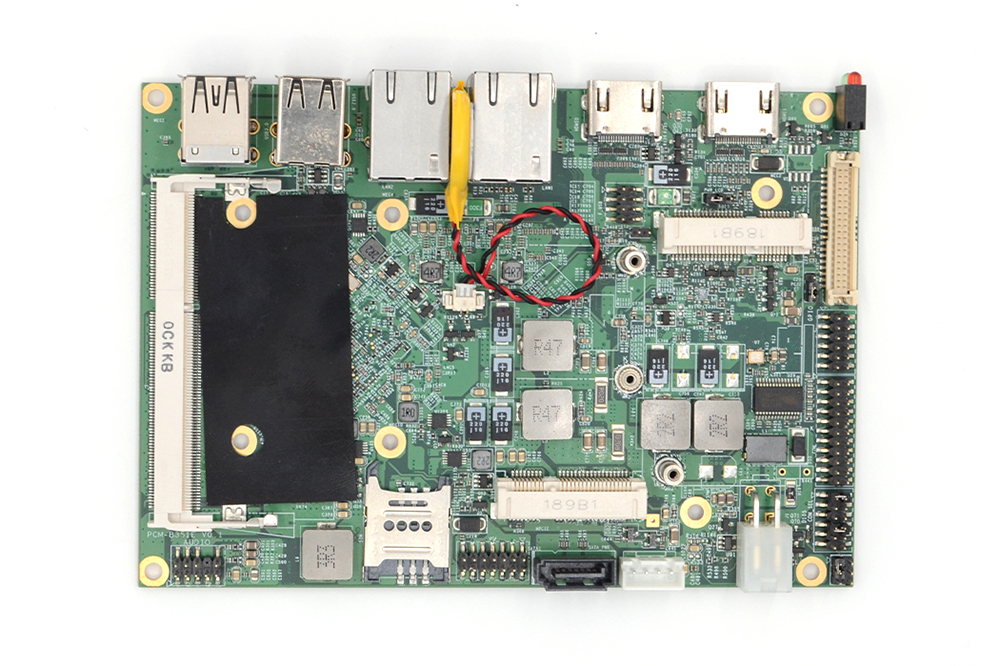
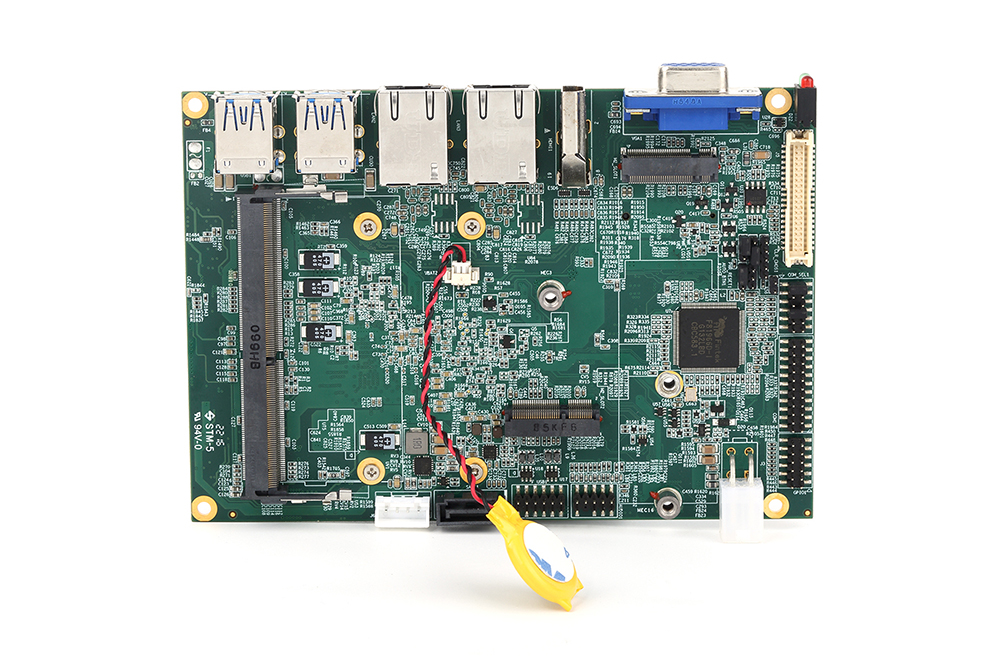
Internal mechanical volume inside autonomous guided forklifts and sorting bots is exceptionally constrained. The 3.5-inch SBC (146mm × 102mm) and COM Express Mini architectures provide all critical computing subsystems in ultra-compact footprints that slide neatly into tight vehicle sub-assemblies.
Unattended autonomous systems cannot depend on human operators to press reset buttons. Programmable multi-level hardware watchdog timers automatically recover the system within milliseconds of a kernel freeze. Onboard TPM 2.0 cryptographic chips ensure boot integrity and guard proprietary navigation code.
Through Mini-PCIe and M.2 slots (Key B, Key E, Key M), embedded controllers expand seamlessly to support dedicated vision processing units (VPUs), Hailo/NVIDIA edge AI accelerators, CANopen interface boards, and multi-SIM 5G connectivity for modern fleet ecosystems.
The key technological developments transforming industrial automation and automated robot intelligence.
As intralogistics systems advance, the boundary between central cloud computing and localized machine intelligence is narrowing. The next evolution of Embedded PC Boards For Industrial Automation And AGV Robot Control centers around three primary technological pillars:
Standard LiDAR-based 2D SLAM is shifting toward visual 3D Semantic SLAM. Instead of perceiving obstacles as abstract point clouds, edge AI accelerators embedded on x86 boards identify objects in real-time (e.g., differentiating between a stationary pallet, a moving forklift, and a pedestrian worker). This cognitive ability empowers AGVs to dynamically recalculate collision avoidance strategies without halting unnecessarily, dramatically improving warehouse throughput.
IEEE 802.1 Time-Sensitive Networking (TSN) introduces deterministic, guaranteed-latency packet delivery over standard industrial Ethernet. Future embedded boards equip multi-port TSN-capable Ethernet controllers, allowing safety-critical robot motion packets, standard sensory payload data, and high-bandwidth camera streams to coexist over unified cabling without deterministic packet contention.
Next-generation industrial processors, such as Intel Elkhart Lake and Alder Lake-N architectures, offer optimal performance-per-watt ratios within thermal budgets under 15W TDP. These platforms integrate multicore CPUs with high-performance integrated GPUs supporting OpenVINO and Intel Deep Learning Boost, allowing compact fanless AGV boards to perform onboard inferencing without drawing excessive battery power.
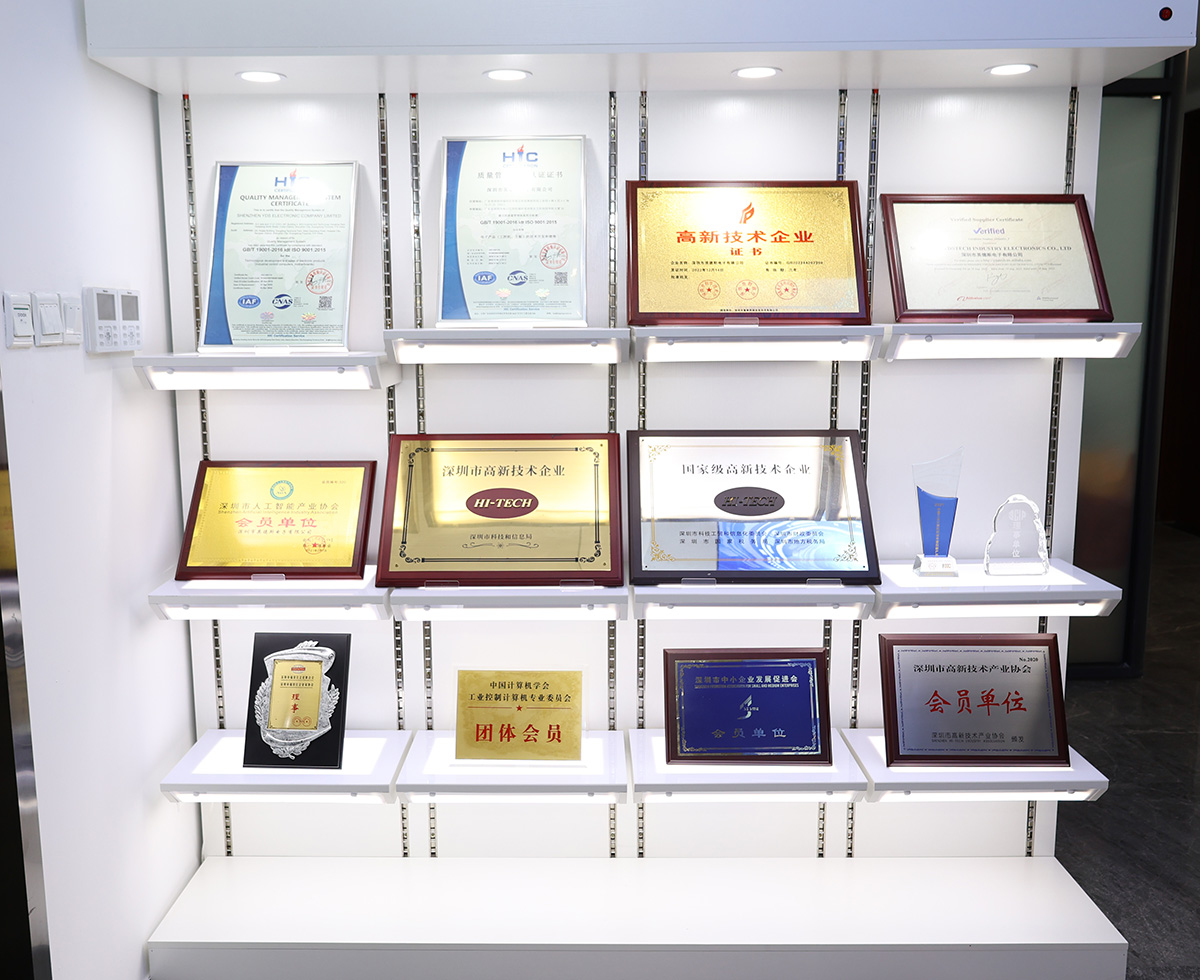
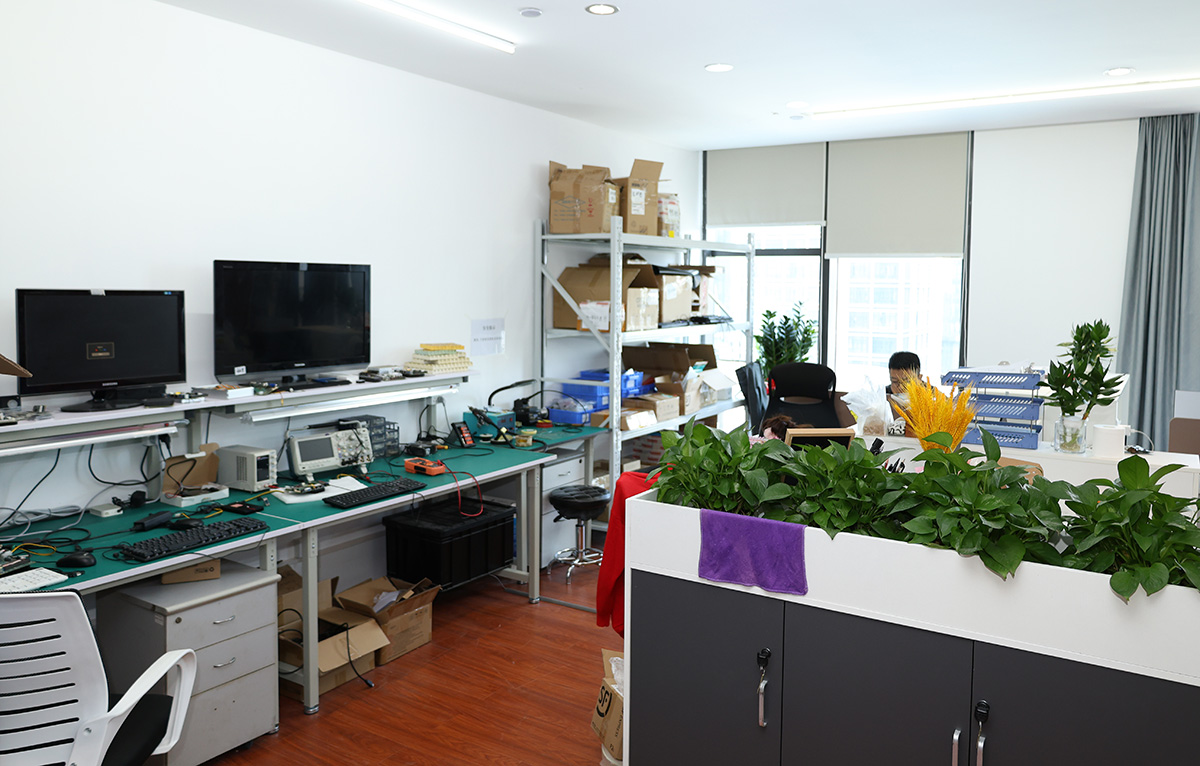
Our core technical team has over 15 years of experience in this industry, and has been focusing on embedded computer research and development, with rich and solid professional expertise. We believe that attitude means everything, since the establishment of YDSTECH, we have always been committed to work with a conscientious, responsible, attentive, professional, prudent and meticulous attitude, which ensures the high-quality output of the products, years of persistence and experience created our strong R&D team.
YDSTECH has set up a comprehensive quality assurance management system, adopting MSA quality system analysis, implementing rolling quality system audit, TQM, SPC process control and other quality management systems, establishing AVL supplier management system to ensure the quality of raw materials, and introducing rolling product reliability tests to ensure overall product reliability.
Our testing infrastructure guarantees that every single-board computer, embedded box controller, and peripheral module leaving our facility complies with international electromagnetic compatibility (EMC), electrostatic discharge (ESD), high/low temperature survival, and shock/vibration tolerance benchmarks, delivering absolute confidence for mission-critical automation systems worldwide.
Explore our full line of rugged x86 motherboards, fanless embedded controllers, and industrial graphics units.