Leave Your Message
0%

China’s become a pretty major manufacturing base for Embedded Motherboard solutions these days—you’ll see them used across automation, transportation, medical equipment, retail, and edge computing. The supplier network there is a mix of well-established manufacturers, specialized design houses, and flexible original equipment manufacturers. That said, quality can vary quite a bit from supplier to supplier. I mean, sure, a polished website can look great—but that alone doesn't prove anyone actually knows how to engineer things well.

So, this guide takes a look at some of the top embedded motherboard suppliers in China, using practical criteria that actually matter. Things like processor support, board layout quality, operating temperature, BIOS stability, lifecycle planning, customization experience, and after-sales service. We also factor in certifications, production traceability, sample testing, and how fast they communicate. At the end of the day, a reliable supplier should give you clear technical documents, realistic delivery estimates, and evidence from comparable projects. Honestly, it's the little things that matter. Something as simple as where you place a connector can affect how long installation takes. And poor thermal design? Well, that can shorten service life out in the field.

Hannes Niederhauser, CEO of Kontron, has been pretty clear about how much customer-focused embedded computing matters. As he puts it, “We want to be a trusted partner for our customers.” And honestly, that same idea should guide you when you’re checking out Chinese suppliers. A rock-bottom quote can look tempting, but it might also mean lighter testing or only limited long-term support. Then there are companies that call themselves manufacturers, even though they outsource most of the engineering work. That’s not necessarily a dealbreaker—but buyers really do need to dig into who’s responsible for what.

The market's pretty competitive—but honestly, no single ranking is going to work for every use case. A supplier that's great for factory gateways might not be the right fit for medical or railway requirements. So buyers should look at documented capability, not just the marketing talk. Think of this overview as a practical starting point, but you'll still want independent audits and sample validation before making any final call.
China Top Embedded Motherboard Suppliers?

What Defines a Leading Embedded Motherboard Supplier in China?

China Top Embedded Motherboard Suppliers?

What defines a leading embedded motherboard supplier in China? Practical engineering experience is a strong starting point. A reliable supplier understands CPU selection, memory limits, power input, and heat control. It should offer an Embedded Pc Motherboard for real operating conditions, not only attractive specifications. Ask for thermal test records, long-term availability plans, and clear revision control. A dusty factory floor exposes weak design quickly. So does unstable voltage.

Professional suppliers communicate with evidence. They explain BIOS support, interface compatibility, enclosure limits, and expected service life. They also provide samples for testing before mass production. Check the connector layout carefully. A small placement error can increase assembly costs. Compliance documents should be current and traceable. Technical support matters after delivery, especially when a field unit stops responding. No supplier is perfect. A rushed sample may pass a short test but fail after months of vibration. That possibility deserves attention.

Tips: Request a complete sample report. Test under heat, dust, and vibration. Confirm repair procedures and spare-part policies in writing. Compare response times, not only prices. Visit the production site when possible. Honest answers may include limitations. That is often a better sign than confident promises.

China Top Embedded Motherboard Suppliers? - What Defines a Leading Embedded Motherboard Supplier in China?

Evaluation Dimension Practical Benchmark What a Leading Supplier Should Demonstrate Recommended Verification Priority
Product Portfolio Support for multiple embedded form factors, including 3.5-inch, Mini-ITX, COM, and custom boards. Offers standard products for rapid deployment while retaining the engineering capability to develop application-specific designs. Product specifications, mechanical drawings, interface maps, and lifecycle statements. High
Processor Platform Availability of x86 and ARM-based platforms, depending on application, operating system, and performance requirements. Can recommend a processor platform based on computing load, power consumption, thermal limits, software support, and expected product life. CPU support list, performance test results, operating-system compatibility records, and roadmap information. High
Industrial Temperature Capability Common industrial operating ranges include approximately -40°C to +85°C, subject to the selected components and design. Provides validated temperature options and identifies the exact operating range of the complete board rather than only the processor. Environmental test reports, thermal design data, component temperature ratings, and test conditions. High
Interface Availability Typical interfaces include USB, Ethernet, serial ports, GPIO, display outputs, storage connections, and expansion buses. Provides stable interface configurations with clear electrical specifications, connector definitions, pin assignments, and driver support. User manuals, schematics, pinout documentation, interface test records, and sample software. High
Customization Capability Engineering changes may include BIOS or firmware settings, I/O adjustment, connector changes, enclosure adaptation, and full-board redesign. Uses a documented engineering-change process with defined feasibility review, prototype stages, validation criteria, and change control. Engineering workflow, non-recurring engineering quotation, prototype schedule, and revision-control records. High
Quality Management ISO 9001-based quality management is a widely recognized baseline for controlled manufacturing processes. Maintains traceability for incoming materials, assembly, inspection, testing, nonconforming products, and corrective actions. Current certification, process flowcharts, inspection plans, audit records, and corrective-action reports. High
PCB Assembly Standards IPC-A-610 is commonly used as an acceptance standard for electronic assemblies; the applicable class should be agreed in advance. Defines workmanship requirements, inspection criteria, soldering controls, and acceptance levels for the intended product environment. Assembly standard statement, sample inspection reports, optical inspection records, and process-control documentation. High
Regulatory Compliance Depending on the destination market, products may need to address RoHS, REACH, EMC, safety, and regional import requirements. Maintains a compliance file covering material declarations, test reports, technical construction details, and product labeling requirements. Declarations of conformity, laboratory reports, restricted-substance declarations, and compliance test plans. High
Reliability Validation Relevant tests can include temperature cycling, high-temperature operation, vibration, shock, humidity, and power cycling. Uses a risk-based validation plan matched to the target application instead of relying only on basic functional testing. Qualification plans, test conditions, failure analysis, corrective actions, and final validation reports. High
Thermal Management Embedded boards may use passive heatsinks, heat spreaders, forced airflow, or application-specific thermal solutions. Provides thermal simulation or measurement data and defines the required airflow, mounting orientation, and ambient conditions. Thermal test curves, heatsink specifications, airflow requirements, and temperature-measurement locations. High
Supply-Chain Control Long-life embedded products require component availability monitoring and an approved alternative-part process. Tracks component lifecycle status, manages approved vendor lists, and communicates last-time-buy or end-of-life risks early. Lifecycle policy, approved vendor list, change-notification procedure, and material traceability records. High
Production Traceability Board-level traceability commonly covers PCB batches, component lots, assembly dates, firmware versions, and test results. Can link each finished unit or production lot to the materials, process records, inspection results, and shipped software version. Serial-number format, barcode records, manufacturing execution records, and sample traceability report. High
Testing Capability Typical controls include automated optical inspection, electrical testing, functional testing, and firmware verification. Uses test fixtures and acceptance criteria appropriate to the board design, with documented coverage and controlled test software. Test specifications, fixture photographs, sample test logs, calibration certificates, and failure records. High
Software and Firmware Support Embedded platforms may require BIOS configuration, board support packages, drivers, Linux or Windows support, and recovery tools. Provides version-controlled software packages, update procedures, documentation, and technical support throughout the product lifecycle. Software release notes, driver packages, source-code policy, recovery instructions, and support response process. Medium
Delivery and Production Capacity Delivery performance depends on product complexity, component availability, order quantity, testing requirements, and customization level. Provides realistic prototype and mass-production schedules supported by capacity planning and documented production controls. Capacity statement, lead-time quotation, production plan, on-time-delivery records, and escalation procedure. High
Warranty and After-Sales Service Warranty terms should define coverage, exclusions, return procedures, repair or replacement handling, and technical support scope. Offers a clear RMA process, root-cause analysis for failures, replacement control, and defined response times for technical issues. Warranty document, RMA workflow, failure-analysis template, support contacts, and service-level commitments. Medium
Documentation Quality Essential documents include datasheets, user manuals, schematics, mechanical drawings, pin definitions, and software guides. Maintains accurate, revision-controlled documentation that matches the shipped hardware and firmware versions. Document samples, revision history, engineering-change notices, and customer portal structure. High
Total Cost of Ownership Evaluation should include board price, tooling, engineering charges, testing, logistics, inventory risk, support, and lifecycle costs. Provides transparent quotations and identifies cost drivers without compromising compliance, reliability, or long-term availability. Itemized quotation, tooling terms, minimum-order requirements, lifecycle assumptions, and cost-change policy. High

Key Criteria for Evaluating Chinese Embedded Motherboard Manufacturers

China Top Embedded Motherboard Suppliers?

When evaluating Chinese embedded motherboard manufacturers, begin with engineering evidence, not catalog size. Ask for processor roadmaps, schematic reviews, BIOS update procedures, and thermal test records. A reliable supplier should explain how an Embedded Itx Motherboard performs inside a sealed cabinet at high temperatures. Request a sample before discussing large-volume production. Test boot stability, expansion interfaces, storage links, and power recovery. Small failures matter.

Factory capability also deserves close inspection. Review SMT production controls, component traceability, inspection equipment, and aging-test procedures. Ask whether the same engineers support prototypes and mass production. Clear answers usually reveal operational maturity. Check quality documents, export experience, warranty terms, and response times. Certifications should match the destination market and the final product configuration, not merely a generic certificate.

Do not judge price alone. A cheaper board may require custom drivers, extra cooling, or repeated redesigns. That cost appears later. I have found that communication quality can be as important as processor performance. Suppliers should document delivery schedules, revision control, and replacement policies. Still, no evaluation is perfect. Factory visits can miss hidden subcontracting, while sample testing cannot predict every field condition. Keep a written scorecard, compare several suppliers, and revisit the decision after pilot production.

Major Chinese Suppliers and Their Core Product Strengths

China Top Embedded Motherboard Suppliers?

China’s major embedded motherboard suppliers serve automation, transport, retail, medical, and edge-computing projects. Many offer x86 boards for industrial gateways, panel PCs, and machine-vision terminals. Others focus on ARM-based designs for low-power controllers and compact devices. Their core strengths include flexible board sizes, long-term customization, and competitive production costs.

Some suppliers provide Mini-ITX, 3.5-inch, COM, and custom motherboard designs. In practical projects, engineers often value BIOS adjustment, GPIO expansion, multiple serial ports, and stable storage interfaces. Thermal design is another key strength. Suppliers may provide aluminum housings, heat spreaders, and tested fanless configurations. That matters.

Reliable manufacturers usually support schematic reviews, sample testing, driver updates, and production validation. They should explain processor availability, operating-temperature limits, and expected product life. Ask for test reports, not only product brochures. Documentation quality can vary. Some technical files are detailed, while others need repeated clarification. This creates avoidable delays.

When comparing suppliers, inspect their engineering response and factory controls. Check whether the sample matches the production configuration. Test boot time, peripheral compatibility, vibration resistance, and heat behavior under continuous load. A supplier may offer excellent hardware but weaker after-sales support. That risk deserves attention. Procurement decisions should balance price, customization ability, technical evidence, and communication discipline.

Embedded Motherboard Types Offered by China-Based Suppliers

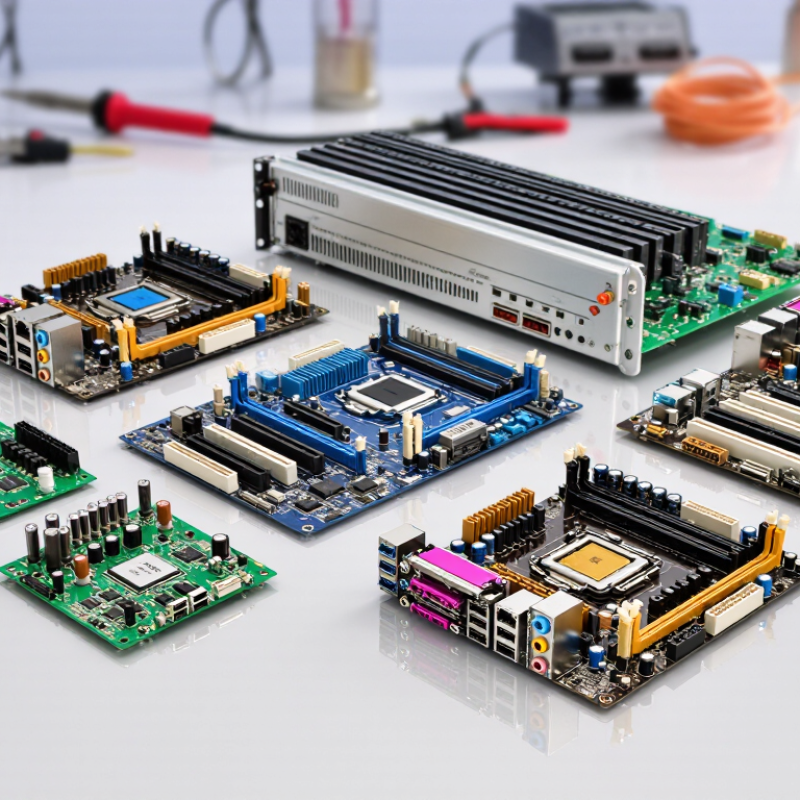
China-based suppliers offer a broad range of embedded motherboard types for industrial, retail, transport, and edge-computing projects. Common options include 3.5-inch boards, Mini-ITX boards, single-board computers, COM modules, and industrial ATX designs. Each type serves a different enclosure and workload. A compact 3.5-inch board may fit a kiosk with limited space. A larger industrial board can provide more expansion slots, storage interfaces, and display outputs.

An Embedded Cpu Motherboard is often available with x86 or ARM processors. Suppliers may provide dual LAN ports, serial ports, GPIO headers, USB connections, and multiple display interfaces. Some models support wide input voltage ranges and fanless cooling. These features matter in factory cabinets, outdoor terminals, and vehicle systems.

Thermal design still needs careful review. A metal case can become surprisingly hot.

Experienced buyers should request schematics, dimensional drawings, operating-temperature data, and lifecycle statements. Ask whether the supplier performs burn-in testing, vibration checks, and connector inspections.

A specification sheet is not proof. Sample testing under real workloads is more reliable. I have seen small differences in BIOS settings affect startup time and peripheral compatibility.

Customization is possible, but it may extend development schedules and raise minimum order requirements. Supplier quality records should be checked, not simply accepted. Some documentation may also need clearer revision control.

Industry Applications Served by Chinese Embedded Motherboards

China’s embedded motherboards serve demanding industrial applications, not just office computers. In factory automation, they control robotic arms, machine vision, PLC gateways, and motion systems. The International Federation of Robotics reported 541,302 industrial robots installed worldwide in 2023. China accounted for 276,288 installations, creating strong demand for reliable industrial computing platforms.

Transportation systems use embedded boards inside ticket machines, fleet terminals, roadside controllers, and railway monitoring cabinets. These systems often require wide-temperature operation, long product lifecycles, and stable serial, Ethernet, CAN, or GPIO connections. IoT Analytics estimated 18.8 billion connected IoT devices in 2024. That growth increases pressure on boards to process sensor data locally, especially where cloud links are slow or unavailable.

Healthcare equipment presents a different challenge. Imaging terminals, laboratory analyzers, patient monitors, and portable diagnostic devices need predictable performance and careful power control. In field experience, storage vibration and dust can be more troublesome than processor speed. A perfect board rarely exists. Some designs still overlook cable access or maintenance space. That mistake becomes expensive inside a sealed cabinet. Professional buyers should review thermal tests, component availability, operating-system support, and lifecycle commitments. Independent validation matters, because a specification sheet cannot reveal every failure mode.

China Embedded Motherboard Applications: 2023 Sector Indicators

These sector indicators illustrate major Chinese application environments served by embedded computing platforms, including intelligent manufacturing, electric vehicles, telecommunications infrastructure, and industrial robotics. The figures are industry-scale indicators rather than embedded motherboard shipment data.

Sources: China Association of Automobile Manufacturers, Ministry of Industry and Information Technology of China, and International Federation of Robotics.

How to Compare Quality, Customization, Pricing, and Support

Choosing among China’s top embedded motherboard suppliers requires more than comparing catalog prices. Quality appears in practical details: stable booting, clean solder joints, tested thermal performance, and consistent BIOS behavior. Request test reports, production samples, and failure-rate data. A supplier should explain the testing process clearly, not hide behind general promises. Check whether components remain available for your planned service period.

Customization can include processor selection, memory layout, storage interfaces, display ports, enclosure dimensions, and operating-system support. Ask for a written specification before engineering begins. Confirm prototype fees, sample schedules, tooling ownership, and change-control procedures.

Small design changes may affect heat, power use, or certification requirements. I have seen projects underestimate these effects. That mistake becomes expensive later.

Tips:

Compare three written quotations using the same technical requirements. Separate the board price from tooling, testing, shipping, and support fees. Ask for a realistic production lead time, not an optimistic estimate.

Support quality matters after delivery. Check response times, remote debugging methods, spare-board policies, and firmware update procedures. A reliable supplier assigns a technical contact who understands your application.

Pricing still matters, but the cheapest board may cost more through delays and redesigns. Leave room for questions. Supplier communication often reveals more than a polished brochure.

Essential Steps for Selecting the Right Chinese Supplier

China Top Embedded Motherboard Suppliers?

Selecting a Chinese supplier requires more than comparing online prices. MarketsandMarkets valued the global embedded system market at about USD 91.5 billion in 2023. It projects approximately USD 116.2 billion by 2028. Demand is expanding, but supplier quality remains uneven.

Start with a technical specification sheet. Define processor generation, memory limits, expansion slots, operating temperature, and power input. For an Embedded Xeon Motherboard, request thermal test curves and sustained-load results. Ask for three production samples, not one laboratory sample. Test boot reliability, storage access, network stability, and BIOS recovery. Short tests can mislead.

Inspect the factory or use an independent audit. Check ISO 9001 certification scope, component traceability, calibration records, and change-control procedures. The supplier should explain its product-change notification process clearly. Request failure data from pilot production, even if the numbers look uncomfortable. A perfect report may deserve more questions. Verify the certificate directly with the issuing body. Review warranty exclusions, minimum order quantities, lead times, and spare-board commitments before signing. IPC guidance supports controlled production records, but compliance on paper does not prove field reliability. Require a written corrective-action process, realistic lifecycle support, and a named engineering contact. Fancy brochures are not evidence.

FAQS

Which industries commonly use Chinese embedded motherboards?

Factory automation, transportation, healthcare, and IoT systems use them widely. Robotic arms need stable motion control. Ticket machines need dependable network connections. Healthcare devices require predictable performance and careful power management.

What functions can embedded motherboards support in factories?

They can control robotic arms, machine vision systems, PLC gateways, and motion equipment. A production line may process camera images locally. This reduces delays when cloud connections are slow. Small failures still matter.

What should transportation systems require from an embedded motherboard?

Transportation equipment often needs wide-temperature operation and long product availability. Stable serial, Ethernet, CAN, and GPIO connections are also important. A roadside controller may sit inside a dusty cabinet for years. Maintenance access is easy to underestimate.

Why is local data processing useful in IoT equipment?

Local processing helps equipment respond when cloud links are slow or unavailable. The board can filter sensor readings near the machine. This reduces communication delays and unnecessary data transfers. It is not always cheaper.

What should healthcare equipment buyers evaluate?

They should examine predictable performance, power control, vibration resistance, and dust protection. Imaging terminals and patient monitors may operate continuously. Storage vibration can cause more trouble than processor speed. That detail is often missed.

How can buyers test a potential supplier’s motherboard?

Request several production samples instead of accepting one laboratory sample. Test boot reliability, storage access, network stability, and BIOS recovery. Run sustained-load and thermal tests. Short tests can mislead.

Which supplier documents and factory controls deserve review?

Review certification scope, component traceability, calibration records, and change-control procedures. Ask how production changes are reported. Verify certificates with the issuing organization. Paperwork helps, but it proves little alone.

What commercial details should be confirmed before ordering?

Confirm warranty exclusions, minimum order quantities, lead times, and spare-board commitments. Request realistic lifecycle support and a named engineering contact. A written corrective-action process is valuable after failures. Fancy brochures are not evidence.

Conclusion

China has become an important source of embedded computing solutions, offering a wide range of Embedded Motherboard products for industrial automation, transportation, healthcare, retail, energy, and other demanding applications. A leading supplier is defined not only by product variety, but also by engineering expertise, stable manufacturing processes, reliable component selection, quality control, long-term availability, and responsive technical support. Chinese manufacturers may provide compact boards, industrial-grade systems, modular platforms, and customized designs that support different processors, interfaces, operating environments, and installation requirements.

When comparing suppliers, buyers should evaluate performance, durability, certification, customization capability, delivery reliability, pricing transparency, warranty terms, and after-sales service. It is also important to review design resources, sample-testing procedures, production capacity, communication efficiency, and the supplier’s ability to maintain consistent quality over time. A practical selection process should begin by defining application needs, comparing suitable product specifications, requesting samples, verifying technical compatibility, discussing customization and support expectations, and confirming the complete commercial agreement before placing an order.
William

William

William is a seasoned marketing professional with a strong commitment to innovation and excellence. Since joining YDSTECH in 1999, he has played a pivotal role in the company's focus on independent research and development in the industrial computer sector. With a profound understanding of the......
Previous 10 Tips for Choosing the Right Industrial PC?