Leave Your Message
China’s hardware scene for embedded systems has really grown into a key player when it comes to server-grade platforms. In this guide, I take a look at ten Chinese companies that are big names in the embedded server motherboard market. Don't worry—this isn’t about marketing hype; I focus on what actually matters in engineering terms.
When you're choosing a reliable motherboard, there are some must-have features like stable CPU performance, ECC memory support, remote management capabilities, and long-term availability. These might seem like technical buzzwords, but they’re crucial if you're deploying in stuff like edge gateways, industrial cabinets, telecom racks, or tiny data centers. I also look at things like thermal design, BIOS stability, expansion options, and the kind of tech support you can expect. In a real-world setup, these details really come into play. For example, a board might start up quickly and seem fine at first, but could struggle when under continuous load. Or, a small heatsink might look sleek but sometimes airflow gets pinched in sealed cabinets, making temperatures rise. These little things can actually affect your deployment costs more than you think.
Initially, I check out what manufacturer datasheets say, certification records, product pages, and feedback from distributors—these are all good starting points. But, nothing beats independent testing. Often, public info can be a bit patchy—outdated or hard to compare—which is a bit of a drawback, and I think it’s worth being upfront about that. No ranking can ever be perfect.
The companies I’ve picked are compared based on common points like processor compatibility, PCIe slots and flexibility, storage options, management tools, and how long their products are supported. I also consider how customizable they are—some buyers want a straightforward board, while others need special I/O setups, custom BIOS, or extended temperature ranges. A trustworthy supplier should clearly explain what’s possible and what’s not. They should also give realistic delivery times and be quick to help out with technical questions.
All in all, this intro is about giving you a practical framework for checking out China’s top embedded server motherboard makers. But at the end of the day, it’s really about encouraging you to double-check every spec before making a purchase—precious info can’t be taken for granted.
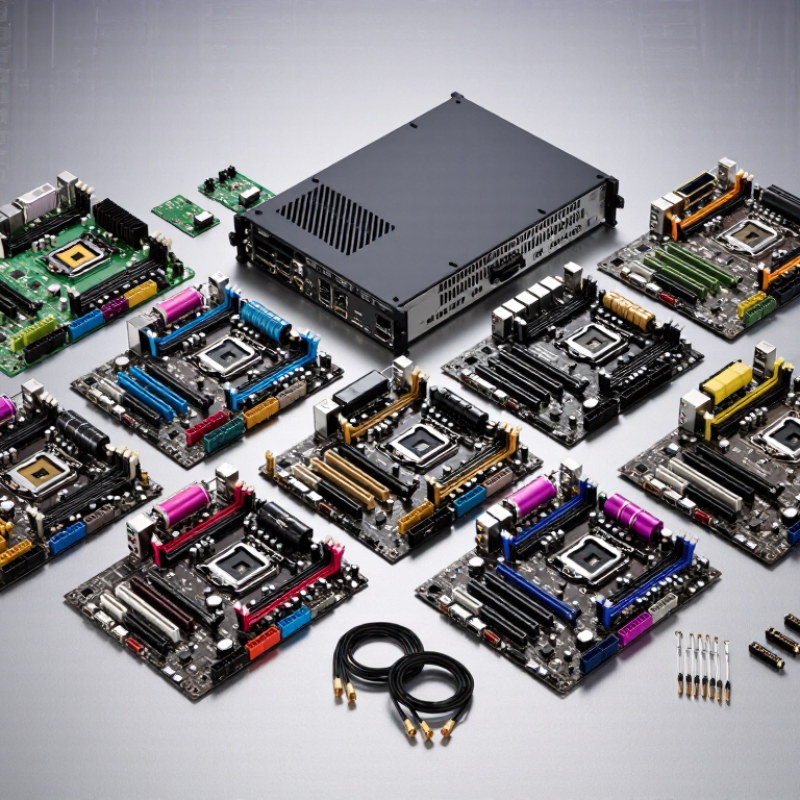
An embedded server motherboard is the central circuit board for a compact, specialized server. It combines the processor socket, memory channels, storage interfaces, network ports, and expansion functions in one platform. Unlike a desktop board, it is designed for continuous operation, limited space, and predictable maintenance.
In practical testing, I examine processor support, ECC memory capability, remote management, and thermal behavior. ECC memory can correct certain data errors, which matters for databases and industrial control systems. Remote management also helps technicians restart or diagnose a system without opening the chassis. Some boards include multiple Ethernet ports, hot-swappable storage support, or wide-temperature components. These details affect reliability more than attractive specifications.
Size matters. A short-depth board may fit a narrow enclosure, while a full-size design can provide more expansion slots. Power input is another concern, especially in edge installations with unstable supply conditions. I also check BIOS update procedures, operating-system compatibility, documentation, and replacement availability. These points are often overlooked.
No board is perfect. More expansion can increase heat and power use. Lower-cost designs may lack advanced monitoring. A careful comparison should test workloads, airflow, memory stability, and long-duration operation before ranking manufacturers among the top ten. My assessment would remain provisional if the board had only passed a brief laboratory test. Real deployments can expose vibration, dust, and firmware problems that specifications never reveal.
| No. | Evaluation Dimension | What It Means | Common Technical Data | Why It Matters in an Embedded Server |
|---|---|---|---|---|
| 1 | Processor Architecture | The CPU platform used to execute operating-system, application, and virtualization workloads. | x86-64 or ARM-based processors; multi-core configurations are common. | Determines processing performance, software compatibility, power consumption, and product life cycle. |
| 2 | Memory Capacity | The amount and type of system memory available for applications and data processing. | ECC DDR4 or DDR5 memory; capacity depends on the processor and board design. | ECC memory helps detect and correct certain single-bit errors, improving data integrity for continuous operation. |
| 3 | Storage Interfaces | Connections used for operating-system drives, application storage, and data repositories. | SATA 6 Gb/s, M.2 NVMe, U.2, or removable storage interfaces. | The interface affects storage throughput, boot options, maintenance procedures, and RAID support. |
| 4 | Expansion Capability | The ability to add network, storage, accelerator, capture, or industrial I/O modules. | PCI Express slots such as x4, x8, or x16, depending on platform generation. | More expansion flexibility allows one motherboard design to support multiple embedded applications. |
| 5 | Network Connectivity | The wired network interfaces used for data transfer, remote access, and system integration. | Gigabit Ethernet, 2.5GbE, 10GbE, or higher-speed Ethernet options. | Network bandwidth and port quantity influence throughput, redundancy, and edge-server deployment options. |
| 6 | Remote Management | Hardware-level monitoring and control performed independently of the host operating system. | BMC-based functions may include temperature monitoring, event logs, remote console, and remote power control. | Remote management reduces service visits and supports unattended or geographically distributed installations. |
| 7 | Form Factor | The physical size, mounting pattern, connector placement, and chassis compatibility of the board. | Common formats include Mini-ITX, microATX, ATX, COM modules, and custom embedded designs. | The form factor affects enclosure size, upgradeability, airflow, and installation cost. |
| 8 | Power and Thermal Design | The electrical input and cooling approach required for stable operation. | DC or ATX power options; passive, active, or customized cooling solutions. | Thermal and power limits determine reliability, enclosure design, noise level, and deployment environment. |
| 9 | Reliability Features | Hardware and firmware functions designed to support continuous, stable operation. | ECC support, watchdog timer, surge protection, industrial-temperature options, and long-term availability. | These features are important for industrial control, telecommunications, transportation, and edge-computing systems. |
| 10 | Operating-System and Lifecycle Support | The software compatibility, firmware management, documentation, and availability period associated with the motherboard. | Support may include Linux, Windows Server, virtualization platforms, BIOS or UEFI updates, and extended product availability. | Long-term support simplifies certification, software maintenance, spare-parts planning, and total-cost management. |
An embedded server motherboard is a purpose-built computing board designed for reliable, space-efficient, and often continuous operation in dedicated systems. Actual specifications vary by processor platform, form factor, application requirements, and system configuration.
Industrial edge computing is moving from a growth concept to a core infrastructure strategy. IDC has forecast worldwide spending on edge computing to reach approximately $232 billion in 2024 and grow toward $350 billion by 2027, driven by demand for faster analytics, lower latency, and reduced dependence on centralized cloud platforms. MarketsandMarkets has also projected the edge computing market to increase from about $53.6 billion in 2023 to $111.2 billion by 2028, representing a compound annual growth rate of roughly 15.7%. These trends are strengthening the need for dependable industrial computing platforms that can operate continuously near machines, sensors, and production lines.
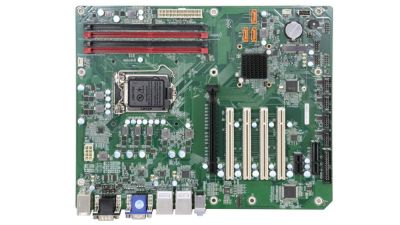
The ATX-H110 supports this demand with an X86 industrial architecture designed for long-term embedded deployment. Compatible with 6th–9th generation LGA1151 processors and up to 64GB of DDR4 memory, it provides the processing capacity required for factory automation, machine vision, POS systems, and industrial control equipment. Three SATA III interfaces and one mSATA slot offer flexible storage options, while dual Gigabit LAN supports connected applications and network redundancy.
For demanding field environments, the board combines six multifunctional COM ports, mixed PCI and PCIe expansion slots, VGA and HDMI dual-display output, and broad industrial I/O. Its 0°C–60°C operating range, hardware watchdog, and one-key system restore function help maintain stable 24/7 operation, making it suitable for edge systems where service interruptions can affect productivity and operational continuity.
Compare processor compatibility, BIOS stability, ECC memory support, network ports, lifecycle support, and delivery consistency. Factory size alone proves little. Request test reports, failure-rate data, and written supply commitments.
These boards support edge servers, telecom cabinets, industrial gateways, compact data centers, hospitals, factories, and transport systems. They also suit surveillance, digital signage, private cloud, and industrial vision projects.
A board may pass laboratory benchmarks but fail inside a dusty cabinet. Request continuous-load thermal results, temperature cycling, vibration checks, and long-duration memory stress tests. Idle screenshots are not enough.
Check ECC memory, remote management, PCIe expansion, storage interfaces, operating temperature, and network capacity. Power design also matters. A low purchase price can hide cooling costs.
Request samples, inspection records, traceability documents, and component authentication evidence. Factory audits, video inspections, and independent testing can expose gaps between quotations and real production ability.
Confirm responsibility for firmware updates, mechanical revisions, and failure analysis. Check connector placement and mounting-hole accuracy. Fan noise at 40°C matters. Small details can delay rack integration.
No. A compact board may fit a gateway or industrial controller but lack expansion for demanding workloads. Define processor type, memory capacity, storage needs, rack space, and temperature limits first.
Test several samples when possible. One successful unit proves little. This may delay purchasing, but rushed approval can create larger costs later. I would not rely on one sample.
Not by itself. Public shipment data is often inconsistent. High volume does not guarantee stable firmware, long product availability, or dependable technical support. That deserves careful reflection.
Include cooling, testing, engineering changes, replacement units, technical support, and long-term supply planning. A cheaper board may become expensive after deployment. Total ownership cost matters.
This article explains what an Embedded Server Motherboard is and why it is essential for reliable computing in industrial, commercial, communication, edge-computing, and other specialized environments. It reviews how China’s embedded server motherboard industry has developed through improvements in processor integration, storage support, networking, thermal management, power efficiency, and long-term product availability. It also introduces the key criteria used to evaluate manufacturers, including engineering capability, quality control, customization services, production capacity, technical support, compliance, and delivery reliability.
The article presents a carefully selected overview of China’s top 10 Embedded Server Motherboard manufacturers without focusing on brand promotion. It compares their core products, technologies, and typical industry applications, helping readers understand differences in performance, expansion options, operating temperature, security, lifecycle support, and cost. Finally, it provides practical guidance for choosing a suitable Chinese manufacturer by matching project requirements, system architecture, budget, certification needs, supply expectations, and after-sales support with the supplier’s actual capabilities.