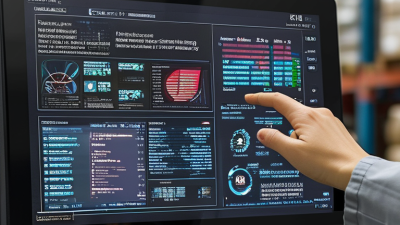
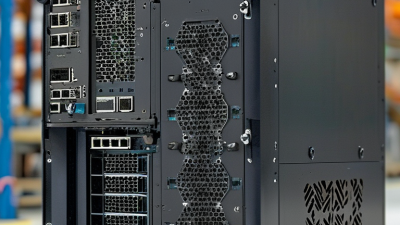
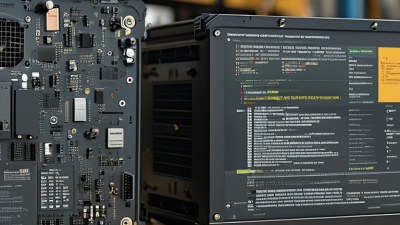
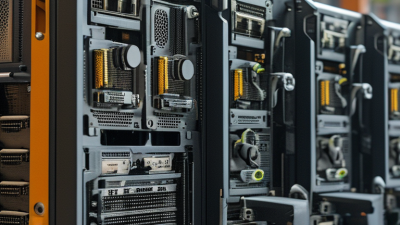
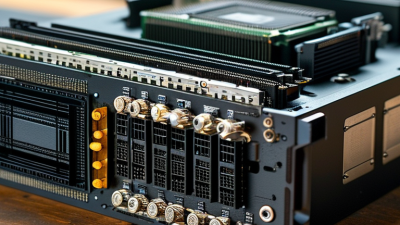
The Industrial Desktop Computer has really become a go-to tool across a bunch of different industries. These machines are built tough—they're designed to handle the harsh conditions you'd find in industrial settings. Compared to your standard desktop, they’re way more durable, reliable, and perform better overall.
If you look at manufacturing, the benefits are pretty obvious. An industrial desktop is made to work in extreme environments—think dust, vibrations, or crazy temperature swings—and it’s pretty impressive how long they last. Big names like Siemens and Dell are really leading the charge here, making systems you can actually count on. You get the sense that users are getting top-notch tech.
Of course, there's the cost to keep in mind. They aren’t cheap upfront, but in the long run, they probably save you a lot of money—less downtime, higher productivity, that kind of thing. It’s all about weighing the initial expense against the benefits you’ll gain over time. Finding that balance between cost and performance can be tricky for many businesses. So, it’s really important to think about what your operations truly need before making a call.
Understanding Industrial Desktop Computers: A Definition
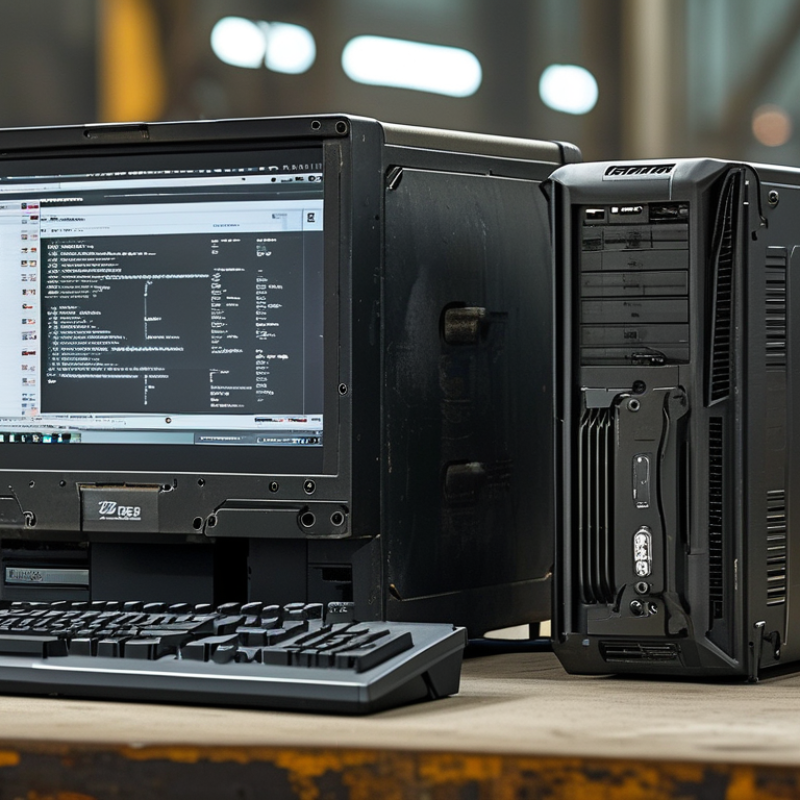
Industrial desktop computers are designed specifically for harsh environments. They often feature robust casings and cooled systems. These machines can operate in extreme temperatures and resist dust and moisture. Such durability makes them ideal for manufacturing, logistics, and other demanding sectors.
These computers often have powerful components. This allows them to run complex software and manage multiple tasks efficiently. Their design focuses on reliability. Many units can run continuously without downtime. This reliability is crucial for businesses that rely on constant data processing and monitoring.
However, using an industrial desktop computer isn't without challenges. Some users may find them bulky and less aesthetically pleasing than standard computers. Additionally, the initial investment can be higher. It's essential to evaluate whether these machines fit a company’s specific needs. They offer excellent long-term value, particularly in challenging work environments.
Key Features of Industrial Desktop Computers
Industrial desktop computers are specifically designed for demanding environments. They excel in productivity, longevity, and reliability. Key features set them apart from standard PCs. These features include robust construction, enhanced cooling systems, and long product life cycles.
The rugged design allows them to withstand harsh conditions, including extreme temperatures and vibration. Many Industrial Pcs also have better protection against dust and moisture, ensuring stable performance in various settings. Their cooling systems are often advanced, helping to manage heat effectively during prolonged use. This durability translates to lower maintenance costs and fewer disruptions in critical operations.
Customization is another important aspect of industrial desktop computers. Users can select components that best fit their needs, such as specific processing power or storage options. This flexibility helps organizations optimize their workflow. Nevertheless, some might find the customization process complex. Understanding the various components and their compatibility can be challenging for less experienced users.
Comparing Industrial and Standard Desktop Computers
When comparing industrial and standard desktop computers, the differences become clear. Industrial desktop computers are designed for harsh environments. They can withstand higher temperatures, vibrations, and dust. Standard desktop computers, while versatile, generally focus on office or home use. They lack the ruggedness of industrial versions.
Industrial desktops often have specialized components. These can include enhanced cooling systems and connectors that resist corrosion. Reliability is key in industrial settings, reducing downtime. A standard desktop may not meet these demands. Its components may fail under stress, leading to expensive repairs or lost productivity.
In terms of design, industrial models are often modular. This allows for easier upgrades and repairs. Standard desktops, however, may have non-upgradable parts. Consideration of these factors can guide your choice, especially in demanding environments. The initial cost of an industrial desktop may be higher, but the long-term benefits are significant.
Common Applications of Industrial Desktop Computers
Industrial desktop computers play a vital role in various sectors. Their robust design ensures they withstand harsh environments, making them suitable for manufacturing, automation, and process control. These systems excel in settings that require real-time data processing and reliability.
In manufacturing, industrial PCs are used for machine monitoring. They collect data from equipment, providing insights into performance and efficiency. This information helps in preventive maintenance, reducing unexpected downtimes. Additionally, in assembly lines, they manage robotic operations, ensuring precision and speed.
Healthcare facilities benefit from industrial desktop computers for patient management. These computers support electronic health records (EHR), enhancing data access. In laboratory settings, they control instrumentation and manage complex analyses.
Tips for selecting an industrial desktop computer include considering environmental conditions. Ensure it has adequate cooling mechanisms. Evaluate the processing power needed for specific applications. Durability and reliability are crucial factors.
The integration of Industrial Pc Hmi can streamline workflows through user-friendly interfaces. Proper training for staff on these systems can also enhance overall productivity. It's essential to regularly assess and adapt the systems to meet evolving needs.
Common Applications of Industrial Desktop Computers
Benefits of Using Industrial Desktop Computers in Various Industries
Industrial desktop computers have become essential in various sectors due to their durability and performance. According to a recent study from MarketsandMarkets, the global industrial computing market is projected to reach $6.28 billion by 2025. This emphasizes the growing reliance on robust computing solutions in challenging environments.
In manufacturing, these computers withstand harsh conditions. They offer resistance to dust, moisture, and temperature extremes. The National Institute of Standards and Technology reported that downtime caused by equipment failure can cost manufacturers upwards of $1.5 million annually. Hence, using industrial desktops can greatly reduce unplanned disruptions.
Moreover, these systems enhance operational efficiency across industries. A report by Gartner states that up to 80% of workplace disruptions stem from unstable computing environments. By employing reliable industrial desktops, businesses can ensure consistent productivity. This reliability not only boosts employee morale but also drives profitability. It's critical to remember that while these systems provide numerous benefits, they also require regular maintenance for optimal performance.
What is an Industrial Desktop Computer and Its Benefits?
| Industry |
Common Applications |
Key Benefits |
Average Lifespan |
| Manufacturing |
Control systems, Factory automation |
Durability, High performance in harsh conditions |
7-10 years |
| Healthcare |
Patient monitoring, Laboratory analysis |
Reliability, Data security |
5-7 years |
| Transport |
Fleet management, Traffic control systems |
Real-time data processing, Compact design |
6-8 years |
| Oil & Gas |
Monitoring systems, Data acquisition |
Resistance to extreme temperatures, Explosion-proof features |
10+ years |
| Telecommunications |
Network management, Server applications |
Scalability, High availability |
5-10 years |
Considerations When Choosing an Industrial Desktop Computer
When considering an industrial desktop computer, several key factors come into play. First, assess the environment where it will operate. Dust, moisture, and temperature fluctuations can severely impact performance. Choose a model with a robust casing and adequate sealing to withstand these conditions. Furthermore, ensure that the device can tolerate high levels of electromagnetic interference (EMI), which is common in industrial settings.
Next, evaluate the computing power you need. Industrial applications often involve data processing, machine control, or complex modeling. A powerful CPU, ample RAM, and a suitable graphics card are essential for seamless operation. However, balance these needs with energy efficiency. Some powerful machines can consume excessive power, which might not be ideal for long-term operation. Always consider your budget constraints as well, as costs can escalate with higher specifications.
Lastly, think about future scalability. Industries evolve and so do their technology needs. Investing in a system that allows for upgrades or expansions can save you time and money in the long run. Look for modular designs that facilitate easy upgrades. However, remember that with rapid technology changes, even the most robust systems may become outdated faster than expected. Striking the right balance between immediate needs and future-proofing is vital.
Future Trends in Industrial Desktop Computing Technology
The landscape of industrial desktop computing is evolving rapidly. One key trend is the integration of artificial intelligence (AI) and machine learning. These technologies enhance data processing capabilities. Industries are now demanding systems that can learn and adapt over time. According to a recent report by Technavio, the AI market in industrial applications is projected to grow by over 35% by 2025. This growth indicates a shift towards smarter, more efficient industrial computing solutions.
Another significant trend is the increasing mobility of industrial desktop computers. Companies are seeking more portable and rugged designs. As a response, manufacturers are developing compact models that can withstand harsh environments. A survey by Allied Market Research highlights that portable industrial computers will make up 30% of the market by 2024. Yet, as organizations adopt these new technologies, they must also address potential cybersecurity issues. The more connected devices become, the greater the risks. Companies should prioritize securing data while leaning into innovation.
The future of industrial desktop computing is promising but complex. Emerging technologies hold great potential. Yet, industries must tread carefully to avoid pitfalls. Balancing advancement with security and reliability is vital. Industry stakeholders, including Industrial Pc Inc, must lead in ensuring that these systems are both effective and safe for use in demanding environments.
Exploring the Versatility and Performance of the Wide Temp X86 11th Gen Tiger Lake-U Industrial Mainboard for Diverse Applications
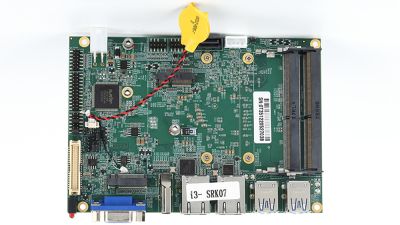
The 11th Gen Tiger Lake-U industrial mainboard stands out in the realm of industrial computing due to its exceptional versatility and robust performance. Designed with the demands of various applications in mind, this mainboard harnesses the power of Intel's cutting-edge CPUs, including options ranging from Celeron to Core i7. Its dual DDR4 SO-DIMM slots allow for a substantial memory capacity, ensuring seamless operation even in data-intensive scenarios. The integration of Intel Xe LP graphics enables multi-display configurations, making it ideal for applications that require visual data representation across multiple screens.
In addition to its high-performance computing capabilities, this board excels in connectivity and environmental resilience. With dual Gigabit Ethernet ports and a plethora of serial ports, USB connections, and M.2 slots, it provides versatile options for interfacing with various industrial devices and systems. Its design supports a wide temperature range, from -20℃ to 60℃, with an optional range extending to -40℃ to 75℃. This rugged build ensures reliable performance in harsh conditions, making it a suitable choice for industrial control systems, machine vision applications, self-service terminals, and gateways. The ability to accommodate a wide DC input voltage further enhances its adaptability across different setups, solidifying its role as a critical component in modern industrial applications.
FAQS
: They are built specifically for harsh environments, like manufacturing and logistics.
They withstand extreme temperatures, dust, and vibrations better than standard models.
Reliable computers reduce downtime, saving businesses from significant lost productivity and costs.
They often include powerful components and specialized cooling systems for efficient task management.
Some users find them bulky, which can be a drawback compared to standard desktops.
The initial investment is higher, requiring a careful assessment of specific business needs.
They help reduce disruptions caused by unstable computing, enhancing overall productivity.
Yes, regular maintenance is critical for their optimal performance in harsh conditions.
Many industrial models have modular designs, allowing for easier upgrades compared to standard desktops.
Evaluating the operating environment's demands and the long-term value of each type is crucial.
Conclusion
Industrial Desktop Computers are specialized computing devices designed to endure harsh environments and provide reliable performance in demanding industrial applications. Unlike standard desktop computers, these systems are tailored with rugged features, such as enhanced durability, wider temperature tolerance, and extended lifespan, making them ideal for sectors like manufacturing, automation, and transportation.
The benefits of using Industrial Desktop Computers extend beyond their robust design; they offer advanced processing power, customizable configurations, and support for various industrial communication protocols. As industries evolve, the need for these computing solutions continues to grow, with future trends indicating increased integration of IoT technology and AI capabilities. When selecting an Industrial Desktop Computer, factors such as environmental resistance, computational requirements, and application-specific needs should be carefully considered to ensure optimal performance in the intended use case.