Leave Your Message
0%

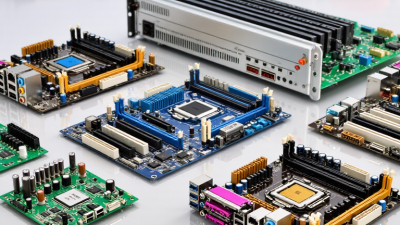
When you look at an Industrial Computer Board, it's easy to just see a flat slab of chips and connectors. But honestly, it's so much more than that. It's the brain inside a factory HMI, a machine-vision station, or one of those compact edge computers. If one of these boards fails, the whole production line can come to a screeching halt. But choose the right one, and it'll just sit there running quietly for years without a peep. Honestly, the difference usually hides in the little things. Fanless cooling. BIOS support that actually makes sense. A stable supply chain. Connectors placed where a technician can actually get to them—not buried behind a bracket you have to disassemble half the machine to reach. As Maya Chen—a fictional composite specialist, not a real person—puts it, “A board is only industrial when its support and lifecycle match the machine around it.” That line is our own editorial spin, not something she said in an interview. But it makes the point: specs matter, but they’re only part of the story.

Okay, so this guide isn't trying to crown a single winner. Instead, I'm looking at ten solid manufacturers—Advantech, Kontron, AAEON, IEI Integration, DFI, Portwell, Axiomtek, BCM, Arbor, and ASRock Industrial—and comparing them. Think of this list as more of a jumping-off point than a definitive ranking, because honestly, your needs are going to differ. Like, if you're building a small automation cabinet, you might be all about a compact Mini-ITX board. But a vision system? That's a whole different story—you'll probably want more expansion slots and beefier graphics support. Before you commit, it’s worth digging into things like operating temperature, processor options, I/O layout, certifications, documentation, and whether the product is actually available. Also, don’t forget to ask about long-term supply—it’s one of those things that’s super easy to overlook. And when comparing manufacturers, take their claims with a grain of salt; check the latest datasheets against your actual project needs. No shortlist is perfect, and this one definitely isn’t either—you might find better regional specialists or newer models that weren’t on our radar. Start by using it to frame your questions. Then, once you’ve shortlisted a few boards, test them out in the real enclosure—under the actual workload, you know?
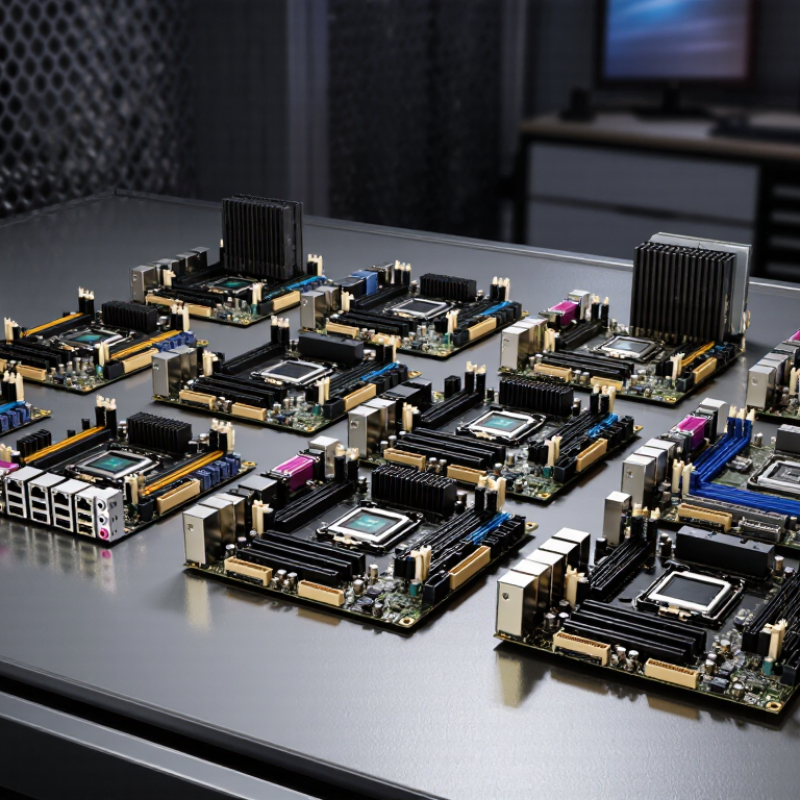
China Top 10 Industrial Computer Board Manufacturers

Definition and Core Features of Industrial Computer Boards

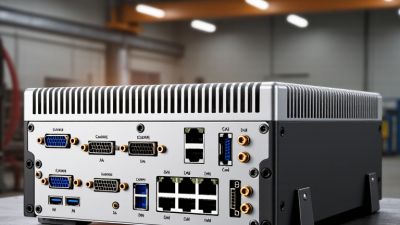
An industrial computer board is the core computing platform inside equipment such as factory controllers, inspection stations, and machine-vision systems. Unlike a typical office board, it is designed for stable operation around vibration, dust, electrical noise, and changing temperatures. An Industrial Single Board Computer combines key components on one circuit board, reducing cabling and simplifying installation in compact enclosures. It may provide long-life component support, multiple industrial I/O connections, and options for fanless cooling. These features matter when a stopped production line costs time.

Reliability depends on more than a rugged appearance. Engineers check operating-temperature ratings, input-voltage tolerance, connector retention, and support for interfaces such as Ethernet, serial ports, and GPIO. IEC 61000-6-2 outlines immunity requirements for industrial environments; it is a useful reference, not proof that every board suits every site.

Grand View Research estimated the global industrial PC market at USD 5.4 billion in 2022 and forecast a 6.3% CAGR from 2023 to 2030. The report covers a broader product category, so its figures should not be read as board-only sales.

Tips: Match the board’s temperature rating to the enclosure’s real internal heat, not the room temperature. Check I/O needs before selecting a processor. Small details matter. One trade-off is easy to miss: fanless designs reduce moving parts, but poor enclosure ventilation can still cause overheating. A careful thermal test is worth the extra time.

China’s Industrial Computer Board Industry and Market Landscape

China’s industrial computer board industry is shaped by extensive manufacturing capacity, connected component supply networks, and demand from automation, transport, energy, and machine-building. Many suppliers offer standard x86 or ARM platforms, while others adapt layouts, I/O, and thermal design for particular equipment. The market is not uniform: documentation, lifecycle support, and test depth can vary considerably. Buyers should compare evidence, not just advertised specifications.

Tips: Check operating temperature, vibration tolerance, input power range, and connector retention against the actual installation. Ask for test reports and a clear policy on component changes. A board that works on a bench may behave differently inside a sealed cabinet. Easy to miss.

Customization and cost are important parts of the landscape, but low purchase prices do not always mean lower total costs. A replacement board may require new drivers, wiring, or validation time. For production equipment expected to run for years, confirm availability plans and technical support before choosing a platform. One practical limitation is that supplier claims may not describe performance in your exact enclosure or workload. Pilot testing can reveal gaps, though it takes time and resources.

Criteria for Ranking the Top 10 Manufacturers

A credible top-ten ranking should assess engineering depth, field reliability, supply continuity, software support, and customization—not marketing claims. I would assign 30% to technical capability, 25% to reliability evidence, 20% to delivery and lifecycle management, 15% to Linux support, and 10% to customization and total cost. These weights are an editorial framework, not an industry standard. Evidence matters.

Reliability scoring should favor published operating-temperature ranges, documented test methods, component-lifecycle policies, and repair response times. A board that runs steadily inside a dusty control cabinet matters more than one with an impressive specification sheet. The WSTS Spring 2024 forecast projected semiconductor sales of $611.2 billion in 2024, up 16% year over year. That figure signals a growing component market, but it does not measure industrial board shipments; rankings should not confuse the two.

For an Industrial Linux Single Board Computer, reviewers should verify kernel and driver maintenance, boot stability, interface support, and security-update commitments. Ask for test records, not just “industrial-grade” language. Compare sample units under sustained load, including temperature changes and power interruptions. Manufacturer disclosures vary, so some scores will remain uncertain. That uncertainty should be stated, not hidden. A fair ranking also needs periodic review as component availability and software support change.

Profiles of China’s Top 10 Industrial Computer Board Manufacturers

China’s industrial computer board makers serve automation, transport, energy, and machine-vision applications. MarketsandMarkets estimated the global industrial PC market at US$5.9 billion in 2023, forecasting US$7.5 billion by 2028. That growth makes supplier profiles useful, but a “top ten” list is not a universal ranking. Buyers should check each maker’s product range, engineering support, and production consistency.

Across ten manufacturer profiles, compare practical strengths: rugged x86 boards for factory control, low-power ARM designs for edge devices, and compact Mini-ITX or COM Express formats for space-limited cabinets. Look closely at CPU options, I/O layouts, temperature ratings, and lifecycle commitments. Small details matter. A board with dual LAN ports, isolated serial interfaces, and accessible BIOS controls may fit a production line better than a faster board with limited expansion.

Request test records, revision histories, and clear warranty terms; specifications alone cannot show long-term reliability. Ask how suppliers handle component substitutions and sample-to-volume transitions. That comparison is useful, but imperfect: published data may not reveal actual failure rates or support response times. Independent validation remains important.

Key Board Types and Their Industrial Applications

Industrial computer boards are selected by their expansion options, power needs, and operating environment. A single-board computer combines the processor, memory, and interfaces on one circuit board. It can run a compact packaging line, collect sensor readings, or serve as a machine-vision controller. Check the connectors first. A camera may need a different interface from a temperature sensor.

Backplane systems use a processor board alongside separate input/output cards. They suit control cabinets where technicians need to replace or expand specific functions without changing the whole system. COM-based designs take another approach: a compact computer module plugs into a carrier board tailored for the application. This can help equipment makers reuse a computing platform across several machines, though carrier-board design still takes careful testing.

Rugged embedded boards often include secured connectors and support for wider temperature ranges. They may be used in mobile equipment, factory inspection stations, or outdoor monitoring cabinets. Industrial Single Board Computer Linux configurations are common in these settings, but compatibility depends on available drivers, kernel support, and attached devices. That matters. Published specifications are useful, yet they do not always reflect vibration, dust, or years of heat inside a cabinet. Bench testing helps, but it cannot reproduce every site condition.

China Top 10 Industrial Computer Board Manufacturers - Key Board Types and Their Industrial Applications

Scope: This table summarizes ten widely used industrial computer board types and their typical applications. It is not a ranked manufacturer list and contains no company or brand names.

No. Board Type Common Form Factor or Standard Typical Features and Expansion Typical Industrial Applications
1 ATX Industrial Motherboard ATX, typically 305 × 244 mm Multiple expansion slots, commonly including PCIe; memory slots; onboard storage and networking interfaces. Machine vision systems, factory automation computers, industrial servers, and control-room workstations.
2 Micro-ATX Industrial Motherboard Micro-ATX, up to approximately 244 × 244 mm Smaller than ATX while retaining motherboard expansion options; configurations vary by model. Compact automation systems, inspection equipment, digital signage, and embedded control cabinets.
3 Mini-ITX Industrial Motherboard Mini-ITX, 170 × 170 mm Compact board layout with processor, memory, storage, and a limited number of expansion options. Small industrial PCs, kiosks, edge gateways, and space-constrained machine controllers.
4 3.5-Inch Single-Board Computer Common 3.5-inch SBC format, approximately 146 × 102 mm Processor, memory, and I/O are integrated on one board; connectors may include Ethernet, USB, serial, and display interfaces. Panel PCs, industrial HMI systems, equipment controllers, and embedded data-acquisition devices.
5 COM Express Module Computer-on-Module standard; module fits onto a separate carrier board Processor and core functions reside on the module; the carrier board provides application-specific connectors and I/O. Modular automation computers, medical equipment, machine vision, and designs that need processor upgrades or custom I/O.
6 SMARC Module Small Form Factor Computer-on-Module; commonly 82 × 50 mm or 82 × 80 mm Low-profile module connects to a carrier board, typically through a fine-pitch board-to-board connector. Low-power edge devices, transportation systems, portable instruments, and compact industrial gateways.
7 Qseven Module Computer-on-Module standard, 70 × 70 mm Compact processor module mounted on a carrier board; available interfaces depend on the module and carrier design. Embedded controllers, compact HMI equipment, instrumentation, and long-life systems using modular designs.
8 PC/104 Stackable Board PC/104 family, approximately 90 × 96 mm Compact boards stack through bus connectors; available variants include ISA- and PCI-based formats. Legacy equipment upgrades, vehicle electronics, data acquisition, and control systems with limited installation space.
9 CompactPCI Board 3U or 6U Eurocard format with a backplane connection Modular plug-in boards connect through a rugged backplane; system configuration depends on the chassis and backplane. Telecommunications equipment, rail systems, industrial automation, and other modular embedded systems.
10 VPX Board 3U or 6U OpenVPX-compatible formats, depending on system design High-speed serial backplane architecture designed for demanding embedded systems; cooling and connector choices depend on the platform. Rugged computing, aerospace and defense systems, high-performance signal processing, and specialized transportation equipment.

How to Evaluate and Select a Manufacturer

Selecting an Industrial Pc Board manufacturer requires more than comparing processor options and quoted prices. Start with the machine’s actual workload, operating temperature, available space, and required ports. Then ask for a sample and test it in the intended enclosure. Check connector placement, boot stability, and heat around the CPU during sustained operation. Small details matter.

Request clear records for component changes, board revisions, and product availability. A manufacturer should explain how it handles testing, defects, and technical support after delivery. Ask how long the board is expected to remain available, especially if your equipment has a long service life. Verify claims with documents, not just a sales call. A spreadsheet can miss things.

Pay attention to communication during evaluation. Send a specific question about BIOS updates or a failed test and note how clearly the team responds. Compare warranty terms and repair procedures before placing an order. One detail is easy to overlook: confirm that the sample matches the planned production configuration. No evaluation is perfect; test results may differ in the final installation. Record those gaps and decide whether the manufacturer can address them before scaling up.

Industrial COM Express Type 10 Boards: Market Context from Grand View Research’s Embedded Systems Report

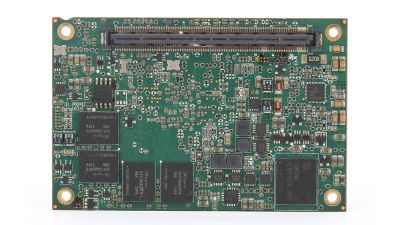
Industrial embedded systems are increasingly expected to deliver dependable computing in compact spaces, while supporting long service life and operation across demanding environments. Market analysis of embedded systems points to the importance of flexible, application-specific platforms for industrial control, transport terminals, and outdoor equipment. Within this context, COM Express Type 10 boards offer a small form factor suited to designs that need x86 computing, a range of connectivity options, and integration into specialized systems.

A compact Type 10 module based on a low-power processor platform can provide up to 8 GB of DDR3L memory and optional onboard eMMC storage. Integrated graphics and interfaces such as USB, SATA, PCIe, and serial ports support varied system configurations, while compatibility with Windows and Linux gives developers flexibility. Its temperature range is especially relevant to industrial deployments: the standard version operates from -20°C to +65°C, and a wide-temperature variant supports -40°C to +85°C. These capabilities make the module a practical option for equipment exposed to temperature fluctuations, including control systems, vehicle terminals, and outdoor embedded devices.

FAQS

What should buyers compare when choosing an industrial computer board maker?

Compare CPU options, I/O layouts, temperature ratings, product availability, and engineering support. Small details matter.

How can I check whether a board fits my equipment?

Test a sample inside the intended enclosure. Check connector access, boot stability, and heat around the CPU during sustained use.

Which board formats suit space-limited cabinets?

Compact Mini-ITX and COM Express formats can help save space. Confirm dimensions and connector positions before ordering.

What should I ask about component changes?

Request records of substitutions and board revisions. Ask how the maker keeps samples consistent with volume production.

Are published specifications enough to judge reliability?

No. Request test records and warranty terms, then validate the board independently. Documents still may not show real failure rates.

What details matter for factory control systems?

Check port needs carefully. Dual LAN ports, isolated serial interfaces, and accessible BIOS controls may matter more than extra speed.

How can I assess technical support before placing an order?

Send a specific question about BIOS updates or a test failure. Note whether the response is clear and practical.

What should I confirm before scaling production?

Verify that the tested sample matches the planned production configuration. Record any gaps. A spreadsheet can miss things.

Conclusion

This article introduces the Industrial Computer Board, explaining its core features, such as reliable operation, long service life, and support for demanding industrial environments. It also reviews China’s industrial computer board market, including its manufacturing strengths, product diversity, and role in serving automation and other industrial sectors. To provide a clear basis for comparison, the article outlines ranking criteria such as product quality, technical capability, production capacity, service, and market experience.

The article then presents profiles of ten leading manufacturers in China without focusing on brand promotion, and explores common board types and their applications across industrial settings. It concludes with practical guidance for evaluating suppliers, comparing technical specifications, checking compatibility and customization options, and assessing support and delivery capabilities. Together, these topics help readers understand the market and make informed decisions when selecting an Industrial Computer Board manufacturer.
Sophia

Sophia

Sophia is a dedicated marketing professional at YDSTECH, where she has been pivotal since its inception in 1999. With a strong emphasis on independent research and development, Sophia possesses an exceptional understanding of the company's core product offerings—industrial computers that are......
Previous How to Choose the Right Industrial PC Board?